Showing posts with label Book Club. Show all posts

Sunday, June 28, 2026

Shakespeare in Kabul (book)

American theater is in crisis, audiences have not returned in numbers since Covid. And how do we engage the new, young audience?

Theaters are closing. Those that remain are sticking to the familiar titles. New Broadway shows are based on IP, well known movies and books.

And yet, we believe in the unique elements of live stage performance. It is an art form which may not thrive in late-stage Capitalism, but we imagine it will outlast the apocalypse. See Station Eleven. See Mister Burns.

There is something compelling about the story of a production coming together, whether it is a hard-won success or a famous flop and there seems to be a special place, as always, for Shakespeare.

Most recently, I have been reading Shakespeare In Kabul by Stephen Landrigan and Qais Akbar Omar. In 2005, shortly after the Taliban was driven from power by American forces, an American playwright (Landrigan) and a French director, Corrine Jaber, decided to bring Western theatrical tradition to Afghanistan. And inspired by the rich Afghan tradition of poetry, Jaber decided it must be Shakespeare.

The narrative begins with Landrigan, but fortunately soon turns to Omar, a native of Kabul, who performed as interpreter for the company, and whose creative input would prove not only transformative but vital.

Cultural sensitivity is a thing, and having decided to produce a play by William Shakespeare in a nation invaded by foreign factions and traumatized by a fundamentalist regime for over thirty years, then choice of title was fraught with potential pitfalls.

Fortunately, they had begun the search for potential performers before choosing what they were even going to play, because their Afghan counterparts were those who insisted it must be a comedy, that their people had endured too much tragedy. The director was hoping to engage women in the performance, and perhaps the best opportunity in Shakespeare for an equal number of roles for women, is Love’s Labour’s Lost.

Labour’s is a challenging play in that it would seem that Shakespeare composed it with a very specific audience in mind. B-plots include the ethnically insensitive depiction of an amorous Spanish nobleman and the nonsensical yet pretentious ramblings of a philosopher. These are diversions, however, from the main story – a king has decided on behalf of his best friends that in order to become great men they must commit to a period of fasting, small sleep, intensive study and the complete absence of women.

Then some women show up. Not just any women: a princess and her own band of friends, charming, intelligent, and witty, and like the boys, four in number. Comedy happens. And this was just what these artists were seeking in Afghanistan in 2005.

Christine Castro & David Ellis
"Love's Labour's Lost"
Cleveland Shakespeare Festival (2000)
You can quite handily edit the text down down to these eight – and the two servants between them – and be left with an entirely satisfying, romantic evening. The Cleveland Shakespeare Festival did just this in 2000, Eric Schmiedl directing.
“They’ve tamed 'Love’s Labour’s Lost', the most problematic of Shakespeare’s comedies … through sleight of hand, with sets and props no more extensive than sunglasses and scarves [CSF] have paired it down to ninety minutes of pure enchantment.” - Cleveland Scene
In this instance, Schmiedl punctuated the romantic interplay with brief addresses chosen from popular fashion and advice magazines. These kinds of artistic choices can irritate purists – one local critic sniffed, “bar pick-up advice and dating-poll conclusions preface and diminish the perceptive beauty of Willie’s insights of the heart.”

But context is everything, and the summer of 2000 was still really the 1990s. And anyway, the Plain Dealer disagreed, calling the production, “a triumph of wit, ingenuity, and clarity.”

Reading Shakespeare In Kabul (a book which was later expanded with the title A Night in the Emperor's Garden) occasionally reminded me of Salesman In Beijing, Arthur Miller’s own account of when he was invited to direct Death of a Salesman in Beijing. In his telling, Miller is remarkably disinterested in Chinese traditions of performance, insisting his team cleave to American theatrical conventions, even as they were speaking in Mandarin.

Jaber, to her credit, wanted very much for the play to feel familiar to the intended audience. Translated into Dari, names and locations were changed to bring the story into a majestic Afghani past.

Even so, there was an issue with the “Muscovites.” Labour’s hilarity reaches its climax when the young men decide to play a kind of prank on the women, disguising themselves Russians. Reaching this part of the rehearsal process, the acting company flew into open revolt, which was shocking to the Westerners. Surely, the Afghans would love this opportunity to mock their former oppressors, and could not understand why their actors felt this was in the very worst taste.

And this is the part I love. And this is why I love to produce the works of William Shakespeare. No, let me take that a step further – this is why I love creating live theatrical productions:

Leila Hamgam, Breshna Bahar,
Marina Gulbahari, Sabar Sahar
"Love's Labour's Lost"
Kabul, Afghanistan (2005)
The French director chose to remove herself from the conflict, from the rehearsal, to – as I understand it – bring down the temperature of the situation. Left alone with the very unhappy actors, Omar – the translator – suggested the men disguise themselves as Indians. Indian culture and in particular Indian “Bollywood” films are wildly popular in Afghanistan, something the Western producers could not have appreciated.

As a result, the performance culminated with the King and his men dressing like characters from their favorite films, singing and dancing and making fools of themselves to impress and delight the women to the sheer and absolute joy of every crowd for which they performed.

The story still ends as Shakespeare conceived of it, the festivities abruptly concluding with the news of the death of the princess’s father. She must go, to mourn, and to ascend the throne, with a promise to return in one year if the men will remain true.

There is much more to the story. The freedoms promised when international forces drove the Taliban from power in 2001 were all too short lived. And one theatrical production seems like such a small thing. I guess that’s why we continue making them.

See also: 
"Love's" in the Time of COVID-19

Sources:
"Back From the Beach, Two summer offerings lure us from shore to show" by Keith Joseph, Cleveland Scene (7/6/2000)
"The Bard’s Version of ‘Friends’" by Linda Eisenstein, The Plain Dealer (7/1/2000)
"Dumbed Down, Cleveland Shakespeare Festival mauls two of the Bard’s comedies" by James Damico, The Free Times (7/5/2000)

Monday, April 13, 2026

The Five (book)

When did serial killers become sexy? Why did serial killers become sexy? Or more to the point, when did they become interesting? Fascinating? A subject of intellectual discourse of heated debate? Because to a man, they are all complete losers.

There was great interest in these losers in the 1990s, due in some part, I guess, to the 1992 Academy Award Winner for Best Picture, The Silence of the Lambs. It is not, however, the subject of the manhunt, Buffalo Bill, who became iconic, but the already incarcerated murderer, Hannibal Lecter, as performed by Anthony Hopkins. He’s cool, eerie, stylish, witty, brilliant, and, some would say, sexy.

He wasn’t the first murderer to hold my interest, however. That would be David Warner as Dr. John Leslie Stevenson in the 1979 time traveling romp, Time After Time. Malcolm McDowell, playing against type, is the bespectacled, naive and charming H.G. Wells, who (in this fictional tale) invents an actual, functional time machine. The device proves advantageous when the police arrive to arrest Dr. Stevenson, who uses it to escape Wells’ home, the city of London and the 19th Century. For Dr. Stevenson also happens to be the man known as “Jack the Ripper.”

Warner’s character travels through time – and space! – to disco-era San Francisco, where he continues his compulsion for slaughtering sex workers.

Because that’s what we know about him, isn’t it? I queried my brother recently, what do you know about Jack the Ripper? Nothing, he told me. I asked who his victims were. He said sex workers.

Seriously, my sixty-four year old brother said sex workers, not prostitutes. We have Gen Z children, after all.

Warner’s “Jack” was cool, eerie, stylish, witty, brilliant, and, some would say, sexy.

We seem to ascribe an extraordinary intelligence to serial murderers, and I imagine we do so due to the fact that they get away with it. They are "always one step ahead of the police” or that some even manage to stay anonymous, forever.

In the mid-to-late 1990s I read both Torso: The Story of Eliot Ness and the Search for a Psychopathic Killer by Steven Nickel and Paul W. Heimel’s Eliot Ness: The Real Story. The Ness-Cleveland connection greatly interested me (duh) and exposed me to the so-called Torso Murders, a series of grisly killings which occurred in the 1930s, and primarily during Ness’s tenure as Safety Director.

Attempts to connect these crimes are specious, but that hasn’t prevented folks from crafting their own theories about a single perpetrator. I personally cleave to the belief that these murders are unrelated. I was particularly grateful when this theory was put into print by Cleveland true crime author John Stark Bellamy in his book The Maniac in the Bushes (and More Tales of Cleveland Woe) that in the absence of corroborating evidence these tragedies should be assumed to be the work of different individuals.

Much has been made of this one guy, a member of a well-placed political family, who wrote taunting letters to Ness, claiming to be the culprit. But what of that? I send taunting letters to the Vice President every week.

Regardless, this desire to tell stories about these violent criminals … before Dexter, a contemporary cable program in which the serial killer is the hero because he kills other killers (oy) there was the X-Files spin-off Millennium. An FBI agent played by Lance Henriksen has the ability to access the sight of criminals, to see what they see. The first season was all about the crimes of serial killers, and I checked out from that show pretty fast. A network program thick with images of pain and horror.

Because that’s what we’re talking about – pain and horror. And as with fictions (Silence of the Lambs, Millennium, Dexter) or reality (Kingsbury Run or Whitechapel) the focus is on the killer. Ostensibly, to discover who he is, but also, because – as they say – he fascinates us.

Except he doesn’t. If reality has shown us anything, it’s that actual serial murderers are not interesting. They aren’t surgical villains with a penchant for chianti. They are outcasts and losers. Like Jeffrey Dahmer, Wayne Williams and John Wayne Gacy, unremarkable sociopaths.

The Whitechapel murders of 1888 inspired the legend of Jack the Ripper. That’s not even a real name, it originates from an anonymous letter to the editor of a newspaper, and almost certainly fake. Popular subjects have included barristers, doctors, and – of course – those within the sphere of the Royal Family.

The single, unidentified person of “Jack” killed five women over a period of several months, and then never again. These five are referred to as “canonical” which, while accurate because it means – generally – to be accepted as part of a group, is offensive to me as it lends legitimacy to something that cannot be known and is likely to be false.

All five were women, and all five have always been said to be sex workers. My introduction to “Jack the Ripper” was the film Time After Time, and it begins with Warner’s doctor encountering and then murdering a woman who has made it clear that the encounter is meant to be transactional.

In her book, The Five, author Hallie Rubenhold does what no one thought to do before, which is to question the common wisdom and to investigate the lives of the victims. Contemporary police accounts state clearly that all five were “prostitutes.” Rubenhold thoroughly documents the prevailing assumption at that time that all destitute women were, or that they may as well be so.

In describing the lives of each woman, we understand each; their unique descent into penury – which brought each to this locale, a district of London which was just one center for the destitute and unhoused – and their commonality, namely that each had an addiction to alcohol.

Rather than slaughtered in the act of solicitation, the first four were much more likely to have been preyed upon while sleeping out-of-doors, while the fifth – also sleeping – was surprised in her bed, the door to her one-room, ground floor apartment easily opened. To ascribe a (still) socially unacceptable occupation has always diminished their personhood, adding “they asked for it” to their epitaphs. But they were human people, undeserving of their economic status as well as their horrifying demise.

This is an actual, mass-marketed
"Jack the Ripper" costume.
This throws some salt into the works for many “Ripperologists” (a hateful term) whose theories about who the murderer may have been, especially those bespoke theories about an assassin for the Man-mans; eliminating a cabal of sex workers who could bring down the Monarchy, or someone on a Messianic quest to purge the city of lechery.

When we understand who the victims were, their deaths seem random. Each was just a very unlucky woman, sleeping rough (as they say) in the wrong place at the wrong time. And conspiracy theorists hate randomness. In fact, Rubenhold has had to endure a great deal of criticism and abuse for this book, as it does not offer any new insight into who “The Ripper” may be, Worse, it tears down a few theories carefully crafted by men (always men) who fancy themselves experts in a rarefied field.

The point is, we don’t know. We’ll never know. Accepting what we do not know is a very difficult thing. Conspiracy theories are born when men strain to apply meaning to what they do not understand, and in doing so they lose sight of the victims.

Wednesday, February 11, 2026

Dark Renaissance: The Dangerous Times and Fatal Genius of Shakespeare's Greatest Rival (book)

There needs to be a word for someone who knows a lot about the works of Shakespeare, but comes far short of a Shakespearean. Last week, Ian McKellen appeared on Stephen Colbert and delivered “The Strangers’ Case” speech from Sir Thomas More (c.1591-1593). That man, McKellen, is a Shakespearean. He lives and breathes the work, all the work, even work like Sir Thomas More, which isn’t actually Shakespeare.

I have, on occasion, referred to myself as a Shakespearean, but only as short-hand. I do know much more about Shakespeare than your average person, and probably more than you. I can deliver a few speeches by heart, and deliver them well, I think. But that only goes so far. I am Shakespeare-passing, Shakespeare-fluent, Bardophilic.

I am not a Bardolotist. I do not worship him. I am also not a Shakespeare fantasist, one who receives or creates bold theories about Shakespeare the man, and warmly keeps and shares them as a kind of truth. We know nothing about Shakespeare’s personality, or his personal decision-making processes, apart from that which is apparent: He lived, he married, he fathered, he acted, he wrote plays, he was financially successful in business, he died. That’s it.

Like a lot of the cursorily Shakespearean, I do not know early enough about his contemporaries. I just read Dark Renaissance: The Dangerous Times and Fatal Genius of Shakespeare's Greatest Rival, Stephen Greenblatt’s recent biography of Christopher Marlowe, which I was disappointed, though not surprised, to find that it includes not much more definitive information about its subject that one of the countless Shakespeare biographies.

I have stopped reading Shakespeare biographies altogether – no one knows anything about him and never will.

No, as in those other books, including Greenblatt’s own, the author finds a man (usually a man) who was in the same place and at the same time as Marlowe, and tells us an awful lot about them. He then infers many purely fictional things Marlowe may have done or experienced as a result of these theoretical associations.

Even worse. I did learn one thing for certain: That one portrait which is generally said to be of Christopher Marlowe? That isn’t even him. It was discovered at Cambridge in the 1950s and nearly discarded. It is unsigned and features no name, only the date and age of the sitter. This means it could be a portrait of any number of people, including Marlowe. But it is far more likely not to be him. However, I have seen this painting so many times, having been told that it is Marlowe, and so it has become him. But it’s not.

Marlowe has a fanciful reputation as the “bad boy” to Shakespeare’s married-with-children vibe. Born With Teeth by playwright Liz Duffy Adams (Dog Act) is a great recent addition to the SDU (Shakespeare Dramatic Universe™) depicting the writing relationship between the established Marlowe and the inexperienced Will (note: they were both born in 1564) collaborating on the plays that would become Henry VI parts one and two. Duffy plays upon the mythology of Marlowe – queer, brash, and probably a spy for the Queen. The great thing about Adams's play is how it suggests that our dearth of knowledge about Shakespeare may have been intentional; in brief, during a period of authoritarianism, the best way not to get murdered is never to share your thoughts.

Was Marlowe even queer, though? Greenblatt focuses his attention on three of Marlowe’s most familiar works; Tamburlaine, The Jew of Malta, Edward II, and Doctor Faustus, describing how each was terribly transgressive for its time. I have only ever seen Edward II (longer title: The Troublesome Reign and Lamentable Death of Edward the Second, King of England, with the Tragical Fall of Proud Mortimer) in a solo adaptation that I will describe to you over drinks some day. This play is held up as evidence of Marlowe’s sexual identity,

anonymous sitter, unknown artist
"ad 1585, of his own age 21"
Found: Corpus Christi College, Cambridge
(Seriously. It's not him.)
The play centers on the (married) monarch’s intimate, possible romantic relationship with Piers Gaveston, to the neglect of his royal responsibilities. However, depicting a homosexual relationship does not necessarily make for a gay-positive play. While the time, attention and gifts Edward lavishes upon Gaveston enrages members of the monarch’s inner circle, would they not have been as troubled had Gaveston been a woman? The king is portrayed as a lovesick fool, unworthy and incapable of maintaining the crown, in much the same way his descendant Edward VIII would be some six hundred years later, over a woman who was considered unacceptable as a King's consort.

It is true, centering a queer relationship must have been a sensation. But the play Edward II is as homophobic as The Taming of the Shrew is misogynist or The Merchant of Venice is antisemitic. And just as Katherina is gaslit and abused into docility, and as Shylock receives a forced conversion into Christianity, Edward is assassinated in a grotesque parody of sodomy. Not merely conquered, but humiliated.

I mean. It was a different time. By today’s standards Marlowe isn’t so much controversial as he is in bad taste. The lesson of Doctor Faustus is entirely conventional. A mortal man sells his soul to the devil in exchange for twenty-four years of receiving pretty much anything he wants. In the case of Faustus, that means learning everything there is to know, and at first that includes standing on far flung mountain tops to view the heavens, and flying through the skies – riding a motherfucking dragon – to examine all the world.

In the end, however, when there is nothing left to know, he is reduced to visiting Rome to slap the Pope and debasing himself by seducing Helen of Troy, which just isn’t as special as you think it might be when you know she may not have been that into you otherwise. The last hour of his life, before he is literally dragged to Hell, Faustus laments and tries to pray and regrets and despairs. How much more devout can a play get? He FA, he FO. The play may have been offensive to the censors, but I can’t imagine a single audience member who didn’t take in this drama and then go straight from the playhouse to the church.

DID YOU KNOW ..? Once Sir Walter Raleigh introduced tobacco to Britain, the English did not first use the verb "smoke" to describe the act of lighting the leaf and inhaling the smoke produced. They called it drinking. They drank tobacco.

Saturday, August 30, 2025

One Day, Everyone Will Have Always Been Against This (book)

Pengo's 2025 Summer Book Club

On the first leg of my flight to Portland last month, I had a window seat. On the aisle, a very chatty white woman, about my age. Between us, in the middle seat, a younger man, on his way to Kashmir. He was concerned he might miss his connection in Philly, a non-stop to Qatar.

The woman was fascinated by the idea of his globe-spanning journey, and had many, many questions. Where? Why? What? Where was he from? What is Kashmir? Isn’t that place dangerous? He was very patient, and generous. I felt for him.

The word “halal” was introduced into the conversation and she didn’t know that word, know what that was. This is where we are in America today, your average Midwestern white lady doesn’t know what halal means.

So, as a matter of course he was revealed to be Muslim, and she became even more fascinated! An outside observer might think this was a pleasant conversation, but in spite of my efforts to keep things banal. She wanted the history of the partition of Kashmir, of Pakistan and India, all the while making sure she reinforced her open-mindedness about things, while successfully cramming the Iraq and Afghan Wars into the conversation.

He was on his way to Kashmir to see his brother whose wife had recently suffered a stillbirth. The white woman asked more than once how the baby died, so soon before the due date. He said he didn’t really know. She suggested twice that the baby was probably strangled by the umbilical cord.

I thought he must have either planned this journey weeks or months ago, intending to play uncle to a happily expected child, or last-minute due to the tragedy, I didn’t ask. I told him I was glad he was going, his brother would be very happy to see him, and that I was very sorry for his loss.

As soon as it was convenient and appropriate, I put in my earbuds to watch a movie. I could no longer deal with this mostly one-sided conversation and wanted to duck about before she brought up 9/11, which in its way brings me to my most recent read, One Day, Everyone Will Have Been Against This by Omar El Akkad, a concise and scathing take-down of Western Liberalism, specifically in the face of the ongoing atrocities perpetuated daily by the state of Israel against the Palestinian people of Gaza.

I read this book last summer, sitting on a deck on the coast in Maine. I pulled it off the shelf from a bookstore in Damariscotta and bought it without knowing one thing about it. I didn’t know what others had to say about it, if it was any good, but I was fairly certain I knew what it was about, based on the image on the cover, and on the title. Based on that title alone, I bought this book.

Just this past weekend, our elder child and I were discussing reading and I mentioned El Akkad’s book. They said they should read that and I said, “I don’t think it was written for you, it was written for me.” And by that I meant my child, both of our children, know what the book has to say. It is a lecture (lecture n. an educational talk to an audience) for the Western Liberal about the Western Liberal, and it asks one question quite plainly and directly, “What do you stand for?” Because it is evident that when presented with the unnecessary and entirely avoidable pain, suffering, and death of children, the Liberal will do nothing.

I know this, I have known it for some time. It has been almost thirteen years since Sandy Hook. That we could face the horror of that day, and do nothing. If the children of Palestine knew how we responded to the slaughter of twenty small children and six of their minders, each of whom were our fellow citizens, with weak words and absolute impotence, they should not be surprised that we wouldn’t do a thing to help them. Care about your children? We don’t care about our own.

At this late date, it is apparent those who lead the Democratic Party believe it will be enough at the mid-terms to say, “We aren’t him.” Not even we aren’t them, the Republicans, it will just be about the guy. And they believe this is all it will take to win seats, and perhaps they may. But having run on nothing, they can keep on keeping on. Because to stand for something is a risk to power. Yes, it is said and I have repeated it, you cannot do anything if you aren’t in the room.

But then they never do anything. We never do anything. About Gaza. About guns. About rights. About justice. There are things we believe. But as a man said, "Belief without action is dead."

Monday, July 28, 2025

On Writing; A Memoir of the Craft (book)

Pengo's 2025 Summer Book Club

TL;DR: Write more. Read more.

I brought a couple of books with me for the trip, but when we visited the local library I was determined to get something and finish it before we departed. Ideally, I would finish it, get another book from the library and finish that before we departed, but I don’t want to get ahead of myself.

It’s not a very large library (it will get larger, more on that in a moment) but it is packed with tomes, and bestsellers, books with big names (literally) on their spines fairly leap off the shelf at you. I may have been gazing at the plentiful offerings from Maine-and-world legend Stephen King when I overheard another patron ask the women at the front desk for a copy of Hillbilly Elegy.

The former James David Hamel wrote one terrible book and became Vice President. It galls my kibe. I promptly turned away from fiction, faced biography, and found King’s On Writing; A Memoir of the Craft. It’s one of those books I have told myself I should read, and it was about damn time.

Here’s the thing; I’m a fan of Stephen King, the man, though not so much his work. But I like his writing. But I don’t care for horror or suspense. King was a constant presence of my adolescence; adaptations of his novels, films like The Shining, Christine, Cujo, The Dead Zone, they were on cable all the time, I didn’t watch them anymore than I watched any of the slasher films that were so popular at that time.

I did watch Creepshow, though, because it looked weird and I was delighted that it was funny. If I had given his work half a chance I may have appreciated King’s tremendous sense of humor in his fiction. And, of course, there is King’s own wonderful performance as Jordy Verrill in that film which made him an actual person in the world to me, and not just a name on a book.

It was my ex-wife, who loves all manner of fiction, who recommended I read The Stand, which I loved, but remains the only novel of his that I have read from the page. For long road trips, she and I would listen to the first three Gunslinger novels on audiobook, narrated by the man himself. It was because of this experience that I will never listen to an abridged audiobook. When possible, I prefer when it is read by the author.

I admire King. I should read more of his work. I am starting here.

"Jordy Verrill, you lunkhead."
Part of the book is autobiographic, “how I became a writer” stuff, but for much of the work he provides actual instruction (he has been an English teacher) not only on what constitutes good writing, but what and how makes good writing enjoyable to read.

King also advises the would-be writer – though you don’t need to be a writer to enjoy reading this book – on practice, which is very helpful. Much of this I know, or have my own personal opinions on, which I have come to in my own way and in my own time. But so much of what he says is true, practical, and useful.

He also repeats certain truths, because they are the most important, but so basic one might forget them in the details he also provides. You must read. You must write. You cannot be a writer if you are not reading and if you are not writing. If you don’t read, your writing won’t matter, and if you don’t write, you’re Fran Lebowitz.
 
“If you want to be a writer. You must do two things above all others: Read a lot and write a lot.” - SK

Keeping King honest is not only his own sense of humility, but he is also unafraid to, from time to time, call out those whose work he does not respect. He loves all kinds of writing, so unlike those who would call his work trash only because he specializes in genre fiction, he dislikes editing that is bad, regardless of genre.

He calls a few authors and their work by name (the book was published twenty-five years ago, so Hamel’s 2016 book is not included) because he believes you can learn by reading those, too, a cautionary tale on how not to write. Okay! I should read those!

King is also an arbiter of truth in writing. When asked about the origin of one of my plays, I said, something pithy like, “It’s all stolen, but it’s all true.” I don’t know how the latter justifies the former, but it seemed appropriate at the time. Making stuff up is what fiction means, but it needs to ring with honesty, and this, as the man instructs, is how you bridge the gap from “write what you know” to “here’s a story about swatting with a fungo on Jupiter.”

And this is as good a time as any to explain that while this non-fiction book was situated on a shelf at the Friendship Public Library opposite King’s fiction, I had to go to the woman at the desk to find it, I didn’t just turn around and see it. But I could have, and you would know, because it sounded true, took less explanation, and sounded like a boss move.

Tabitha & Stephen King
The big question, for me, was what lessons I may have taken from Stephen King for my playwriting. He emphasizes story above all else, and also that dialogue defines character, but in drama dialogue is story, dialogue is action. He says, “writing good dialogue is art as well as craft,” and that is certainly true, and never more so than in a play script.

One of King’s extended metaphors is the writer’s toolbox, and what is one each level of the toolbox. Vocabulary, for example, and grammar, on the top layer. Below that, the proper elements of style, like tense and adverbs (not adverbs ...) below that, structure – literal structure, like how to construct paragraphs.

As you can see, a playwright’s toolbox will be very different. It’s all a matter of which tools you use the most, and which you use less frequently. The first layer would be dialogue and character, the second layer stage directions – the necessary stage directions, which are different from the ones you write for the first draft of your script and later cut because they aren’t necessary and will only annoy the actor.

This is a tremendous exercise, and one I need to think through before continuing. The Playwright’s Toolbox. A quick Google search tells me someone wrote a book by that title and just last year, but that doesn’t mean I can’t create my own.

The most critical part of the book – to me – is when he cautions the writer about backstory. To wit; “The most important things to remember about backstory are that (a) everyone has a history and (b) most of it isn’t very interesting.” I have also been told, more than once, that a good play is about what is happening, and not about what has happened. Story telling can make a decent monologue, but any entire play cannot be about rehashing the past.

And I wonder, isn’t that what I do? Doesn’t that describe a lot of my plays? How much of The Right Room is couples talking to each other about their lives? And yet, I have seen how it is effective, that there is present action in story telling. Isn’t that why we love The Breakfast Club?

Finally, I was touched by the credit he provides his mother, and also his life partner. His mother, who worked her entire life, raising her children on her own, was supportive of his desire to write fiction from the very beginning. He also name-checks his several mentors.

But it is his wife, Tabitha Spruce King, herself a novelist, and also a poet, to whom he attributes his success, and not in some abstract, I couldn’t have done it without 'er kind of way. He is very specific about how, without her work, he would not be this highly visible, let alone successful, author. Not without her belief, her criticism, and her actions.

Thursday, December 26, 2024

Pengo's 2024 Summer Book Club

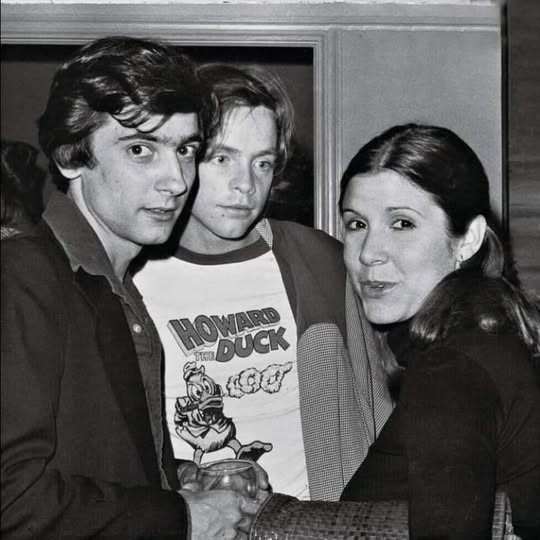
Griffin, Mark, Carrie & Howard
Over the summer I did more reading than I had in a long time, or even since, which is a pity because there is much more time in which to do it in.

A two week vacation afforded me the opportunity to read two books with a third bringing me home; no small coincidence they all had to do with the performing arts.

The Playbook: A Story of Theater, Democracy, and the Making of a Culture War by James Shapiro is a rather company history of the Federal Theatre Project, and how that three year government works project led, in its way, to the establishment of the House Committee on Un-American Activities which stretched from that time in the mid-1930s into the 1970s.

He’s not just documenting history, however, his main agenda is to illustrate how the lust for power and influence, rather than any particular belief or sense of duty, drives certain individuals to frighten the public with manufactured bogeymen, and to destroy those who are earnestly working in the best interests of the society as a whole in pursuit of their own hollow desires. This is as true today as it was in 1938.

While I was in Maine, I was not participating in the BorderLight Theatre Festival in Cleveland.* This is a pity, as in 2023 I was able to indulge in the festival and was thrilled by all the local artists working in and around downtown Cleveland that weekend.

This year, one of BorderLight’s international artists was Paterson Joseph, a British actor of TV and film and a veteran of the RSC. I remembered him from the absurd BBC hospital drama parody Green Wing, and, as it happens, I had also seen him play Oswald in King Lear at Stratford-Upon-Avon in 1990, when we were both much younger men.

In Cleveland this summer, he performed his monodrama Sancho & Me: One Night Only, based on the life of Charles Ignatius Sancho, a British composer (among numerous other talents and vocations) who was able, in spite of having been born on a slave ship, to rise and prosper in society. He was even the second person of African descent to vote in England.

While I was unable to see this performance, I did take advantage of an online lecture, The Art and Craft of Historical Fiction Writing, for which Joseph, speaking to us live from London (it was midnight where he was, bless him) described the process of taking a figure like Sancho, who left a scant historical record of his personal life, and building it into a fully formed character.

He referred to his own novel, The Secret Diaries of Charles Ignatius Sancho, and when the time arrived for questions I asked about his process, adapting his novel into his script. He explained that it was, in fact, the other way around – he has performed this play for some time, and during the Covid-19 quarantine he took the opportunity to expand the work into a novel, his first.

By the time the seminar had concluded, I had already texted my wife to order a copy of the book from Loganberry Books, and they already had it in stock – because of course they did!

I was mostly through Playbook when we arrived in Friendship, but dropped it for Secret Diaries because I was in a fictional mood. It is fiction, in that there is so little known about Sancho, but it sings with truth, truth observed in it by the deep historical research conducted by the author.

Finally, I picked up a birthday gift, The Friday Afternoon Club, a memoir by Griffin Dunne. I have long appreciated the dry hipster wit of Dunne, as represented in his performances in films like An American Werewolf in London and After Hours, and have sympathized in him the life of one who strived but always feels out of place wherever he is.

The book is neatly divided in half; the first a collection of tales about privileged slackers, the second in which we take a harrowing turn into the death of his sister, and the ensuing trial of her murderer.

Then I finished The Playbook. Non-fiction, historical fiction, memoir. And since last summer, I’ve been working on my own historical fiction, which is its own kind of memoir of striving, and my own search for acceptance and meaning. 

The book by Joseph and the one by Dunne were inspirational, each in their insistence on honesty and emotional accuracy. The Shapiro book reminds me I have unfinished writing business, on a work which remains relevant and in the new year may become even more so.

*This is not entirely accurate. Talespinner Children’s Theatre remounted my stage adaptation of "The Toothpaste Millionaire" on July 27.

Saturday, June 1, 2024

I Love the Bones of You: My Father and The Making of Me (book)

Aboard the Cunard Queen Mary 2, at the ship’s fore, there is a library. It is well stocked, a cozy room with many chairs and couches and plentiful views of the ocean. We spent much time there, and so did many others, the place was often full of people, reading.

The first book to catch my eye was Christopher Eccleston’s I Love the Bones of You: My Father and the Making of Me (2019). It is hard for the eye not to be caught by the sight of Eccleston’s face, or his name. Most Americans, if they know him, know him as an actor who often plays villains or other complicated people, or as the Ninth Doctor.

Of course, I had no idea he’d written a memoir, so I didn’t think twice, this would be my library loan for the week. And it’s like the opposite of a traditional memoir – his parents are loving and supportive. He’s a strong-minded actor, and one who plays intense characters, which has given him a reputation, but he’s so positive, about everything.

One thing I really enjoyed was how Eccleston really respects writers. Often, when involved in the production of a film or television series, he will base his performance on the writer. I love that.

The through line of his story is the love he holds for his father, and what it was like to lose him over a decade-long struggle with dementia. I lost my mother in two months. I do not know which is worse. I have wished to have had the chance to say good-bye better. Eccleston reassures me that just may not have been possible.

It’s quite a book. I had a fantasy about running into him in London, just so I could say thank you for this book you’ve written. That, and you’re my Doctor.

Saturday, September 16, 2023

Acapulco Gold (book)

Pengo's 2023 Summer Book Club

I have always been in love with marketing. As a kid, I wanted to sell things. I don’t mean I wanted to make money (I’m still no good at that) I wanted to create product for others to acquire from me.

An artist does, too, but an artist is very particular about what they create. I wanted to make and to find an audience for things people wanted. I would design cereal boxes and candy wrappers. I made greeting cards. I wanted to be a graphic designer, I guess. 

I did try taking courses in design, at Ohio University, and at Kent. But I was never very successful. Mom said I should have gotten a job at American Greetings, and she was right.

I embraced my role making posters and other promotional materials for Guerrilla and Dobama. I was happier designing the posters for Bad Epitaph than I was directing the plays.

Long before becoming engrossed in the TV program Mad Men, which is ostensibly about the business of advertising, I had read a book in high school called Acapulco Gold by Edwin Corley. Written in 1972, it’s an in-depth description of one Madison Avenue advertising executive, told with the same kind of hard-drinking, hard-playing bravado of that aforementioned 21st century TV program, though this story focuses on the account of one firm working secretly to get the jump on federal approval for the recreational use of cannabis.

"Mind Your Own Business" poster
Guerrilla Theater Company (1994)
I drew this!
How would a commercial advertising firm promote weed?

The more amusing aspects of this fable set aside (are they amusing? I cannot tell if the casual racism, sexism and homophobia exhibited by the main protagonist is meant to comment on the mores of the time, or the author’s actual sensibilities and does it make any difference) as a teenager I was largely compelled by the occupation itself – how to create a campaign for the product.

Currently, I am writing the adaptation of a book, a different book, a book for children, and it also tells the story of a product (to be sure, an entirely different product) from first idea to development to marketing and national exposure. 

This children's book is tightly focused on the mission to succeed and how, as is often the case, the effect these decisions have on the lives of those around the actors involved can get lost. Capitalism creates many orphans.

Sunday, August 20, 2023

The Secret to Superhuman Strength (book)

"The Secret to Superhuman Strength" (2021)
Art & text: Alison Bechdel
Pengo's 2023 Summer Book Club

Reading Alison Bechdel’s third graphic novel, The Secret to Superhuman Strength, I was (of course) reminded of my own attempt to describe my obsession with exercise, the solo performance And Then You Die (How I Ran a Marathon in 26.2 Years).

That was very much my midlife crisis play, parts of it are a bit cringey. But I was trying to search my soul for reasons and understanding, to explain to a lay audience why running is important, even necessary, for my continued existence.

Bechdel’s experience has had a more varied relationship with activities of physical exertion, and describes them with her fascinating attention to detail, in written word and her unique, specific and elegant illustrative style. Not only how to run, bike, ski, hike, to perform karate and yoga, but also the accumulative effect these exercises have on the body, the self, the bank account, as well as interpersonal relationships and family.

"And Then You Die" (2009)
Art: Cat Kenney
By the end of calendar 2022, I was trying to accept the shape I was in, a 190 pound man. I had assembled a fine wardrobe of clothes that looked good fit me comfortably, that did not constrict or pinch; layered looks, a fuller beard. Accepting, but also concealing. Acceptance is good, if you mean it, but I wasn’t happy. 

It wasn’t all vanity, I didn’t feel good. I was uncomfortable, hile driving, sitting. Also, my breathing was not easy, walking up stairs left me winded. Sleeping I could feel my heartbeat throughout my body, sometimes hard, sometimes trembling. It wasn’t good.

And so I made the decision, starting last March First, to dry out, and to eat with more intention. Less sugar, fewer snacks, no alcohol (for that month, anyhow). More recently I made a commitment – with the encouragement of our eldest – to limit my alcohol intake to one drink a day, if that. I have kept this pledge for several week and it has made a difference.

And I resumed running, which I had nearly given up on. Since then I have taken no fewer than twenty runs each month, March, April, May, June, July, and on track for August. I thought I’d never enjoy running again, and I love it more than ever.

"The Secret to Superhuman Strength" (2021)
Art& text: Alison Bechdel
Bechdel’s own relationship with alcohol is something she shares in the book. Wine is her beverage of choice (full glasses and empty bottles rendered in loving detail) as well as her intimate relationships, and how exercise affects, or even fosters those. This was also a major part of my running play, with the pursuit of monogamy, like my recent alcohol control, arrived at as another commitment necessary for my continued happiness and existence.

The book is braided with narratives of the writers Bechdel was affected by at varying stages of her life’s journey – Kerouac, Coleridge, Fuller – and their relationship to nature and the outdoors – which are necessary partners of hiking, running, skiing, climbing, et al. – and the expression and understanding of the self.

This also comes up in my play, as I ruminate while running, over stories by Forster, Cheever, London.

"And Then You Die" (2009)
Art: Cat Kenney
But running or any exercise is one of the few opportunities we allow ourselves to think. Our bodies are occupied, with movement, so our minds are free to wander, consider, and ideally to make connections we may not allow ourselves to make when we are at rest.

Admittedly, this book, my play, these are documents of privilege. Many cannot afford to or are physically unable to spend time and money (all the money) on these physical pursuits. So I appreciate the kinship I share with this author in the ways her personal journey reflects my own* and I am grateful for the opportunities I have had to pursue them. Running has brought me great joy, and has provided a potential path to enlightenment.

The ex-wife once asked if I run the same path every day, because for the most part, I do. A mile to the park, a mile through the park, a mile home. Her question made me ask myself why I do. I doubted. Surely, I should change it up, for reasons both physical and mental. Don’t I get bored? Am I not progressing?

I have decided that, either metaphorically or literally, taking the same path each day may be a key to my enlightenment, or at least acceptance. In meditation, as in life, beginning again, from the start, is not a failure of achievement nor imagination. It just is. Every day we begin again.

It is not unintentional that the cover of The Secret to Superhuman Strength, as well as the chapter chapter pages, are evocative of ink and wash artwork. Bechdel’s relationship with Buddhism is a central theme of the book. As I set out each morning, I hope to enjoy the run itself, to be running, the action itself, not its end.

Last weekend we delivered our youngest to university, and now our house is once more a home for two. My sister-in-law congratulated me, as though it were me that had accomplished something, by successfully concluding some kind of undertaking.

But now that this stage of my life is past, I’d like to think I was more engaged with the journey than working toward the finish line.

My running blog, Daddy Runs Fast, is a chronicle of every run I have taken since 2006.  

*One thing that’s not entirely accurate about And Then You Die is what the protagonist – me – does for a vocation. I made myself a cartoonist. The remarkable Cat Kenney created all of the artwork used for the show.

Saturday, July 29, 2023

The Ghost Theatre (book)

Pengo's 2023 Summer Book Club

It is common knowledge that women were not allowed to perform on stage in public during that period when Shakespeare wrote his plays. Roles such as Juliet, Viola, Rosalind, Portia, even Lady Macbeth and Cleopatra, were all (likely) first performed by adolescent boys.

However, in the early years of the 17th Century, there were acting companies composed entirely of male children. It was a thing. They played not only the women’s roles, but the men’s roles, too. Not at the Globe, however. In fact, Shakespeare was so irritated by the practice that the First Folio edition of Hamlet, printed in 1623, includes an exchange in which even a Danish prince has opinions about a theatrical convention in England that had fallen out of favor years earlier.

Act II, Scene ii: Hamlet laments the fortunes which have befallen a beloved troupe of actors who have lost patronage and must travel to make their nut. The “late innovation” Rosencrantz alludes to are the companies of boy players.
HAMLET
What players are they?

ROSENCRANTZ
Even those you were wont to take such
delight in, the tragedians of the city.

HAMLET
How chances it they travel? Their residence,
both in reputation and profit, was better both ways.

ROSENCRANTZ
I think their inhibition comes by the
means of the late innovation.

HAMLET
Do they hold the same estimation they did
when I was in the city? Are they so followed?

ROSENCRANTZ
No, indeed are they not.

HAMLET
How comes it? Do they grow rusty?

ROSENCRANTZ
Nay, their endeavor keeps in the wonted
pace. But there is, sir, an aerie of children, little
eyases, that cry out on the top of question and are
most tyrannically clapped for ’t. These are now the
fashion and so berattle the common stages (so
they call them) that many wearing rapiers are afraid
of goose quills and dare scarce come thither.

HAMLET
What, are they children? Who maintains ’em?
How are they escoted? Will they pursue the quality
no longer than they can sing? Will they not say
afterwards, if they should grow themselves to common
players (as it is most like, if their means are
no better), their writers do them wrong to make
them exclaim against their own succession?

ROSENCRANTZ
Faith, there has been much to-do on
both sides, and the nation holds it no sin to tar
them to controversy. There was for a while no
money bid for argument unless the poet and the
player went to cuffs in the question.

HAMLET 
Is ’t possible?

GUILDENSTERN
Do the boys carry it away?

ROSENCRANTZ
Ay, that they do, my lord—Hercules
and his load too.
Wedding feast at the house
of Sir Henry Unton
(unknown, c. 1596)
The text in italics is not present in the Second Quarto (1604) which begs the question: Why was this exchange not part of the printed text when the subject was relevant, and added long after the fad had passed? I assume (and it is only my assumption) that some cheeky, possibly embittered adult performers first improvised this bit of topical humor, and it was later added to the prompt book from which the text of the First Folio was edited.

The “Children of the Blackfriars Theatre” are the inspiration for the novel The Ghost Theatre, a novel by Mat Osman, author and former bass player for the 90s Britpop band Suede. I need to expand my repertoire of reads, because I keep getting recommended and then falling into Shakespearean pastiches. Last summer it was Bedtrick, which I enjoyed, and then there’s Hamnet which I started more than once but keep losing interest in.

I seem to have just enough knowledge of what we do and do not know about Shakespeare the man that I have little patience with anything that smells fishy. What’s great about Ghost Theatre is that the Bard is mentioned once, in passing, and only then in regards to the aforementioned whinging from Hamlet.

The courtly theater of Blackfriars is a different beast than the Globe, in that it serves an audience of greater means, and as an indoor theater can play with light and stage effects in a manner that a daylight theater cannot. And in that, it is a very interesting read, a peek into a popular entertainment that doesn’t get the wide and varied historical fiction treatment that the Globe has received.

The story also delves into the murky world of a company made entirely of “underage” actors, taken from their parents (with permission from the Queen) to perform for the entertainment of adult audiences, with all of the perils that might suggest. 

Saturday, February 25, 2023

Indie Theater Guy (book)

So I wrote a play. In 1997, The Vampyres was produced at Dobama’s Night Kitchen and I thought I was on my way to becoming a serious playwright. I printed one hundred bound copies of the script, got a copy of the Dramatists Sourcebook, and sent it to every theater in America whose submission policy seemed open to such a work.

And I waited and nothing happened and I didn’t write another play for five years.

It wasn’t until a chance visit to NYC and an invitation to see some shows at the fledgling New York International Fringe Festival (FringeNYC) that I became aware not only of the vast amount of great (and not-so-great) independent theater, but that there was a movement afoot to share and raise the profile of such work.

Around the same time, a New Jersey accountant named Martin Denton decided it wasn’t enough to experience and enjoy new works by Downtown theater artists, he needed to participate, and he has told his story, and the story of early 21st century “fringe” theater in his new book Indie Theater Guy.

He could have called it Internet Theater Guy, because it was Martin who first chose the fledgling internet as his venue for promoting and celebrating experimental work. Gatekeeping media like the New York Times or Time Out New York may, by necessity as well as design, could or would only review a few shows a week. Martin started nytheatre.com which (among other things) was dedicated to reviewing every single show at FringeNYC, every single year.

Think about it. Let’s say you were an out of town act, maybe from Cleveland. You spent time and money and effort to get a show to New York, it may or may not have received any attention. But at the very least, you were guaranteed one New York City review, at least one, and you found it at nytheatre.com.

Martin Denton
Martin himself came to see And Then You Die
 at the 2009 Fringe, and he viewed it with a critical eye, questioning whether or not I had stuck the landing with my solo performance about marathon running. I was just flattered that, out of two hundred shows to choose from and with a staff scurrying around lower Manhattan to see and report on all of them, Mr. Indie Theater himself chose mine.

Here’s the thing: While Martin’s efforts were concentrated on what was happening exclusively in New York City, the impact of his work in the first two decades of this century had a wide-ranging impact, on me in Cleveland, and for so many others. And he used the internet to make it happen.

When podcasts were first becoming a thing, Martin produced the nytheatrecast which featured independent theater professionals interviewed by empresario Trav S.D. I was a dedicated listener.

Then there was the Indie Theater Now project, an online database of play scripts. For only $1.29 you could buy a script! And playwrights across the country were encouraged to do so. I did. And people read them.

All of these efforts have served their purpose, and they have come and they have gone. But their effects are lasting. Would New Play Exchange be a thing if Martin hadn’t first proved that playwrights were not only willing but eager to get their work out there for people to read in such great quantity? Who knows?

Martin’s organizational work within NYC has also paid great dividends, and you can learn about them in his brief memoir. But this playwright is grateful for the way he used new technologies to greatly expand access to and awareness of modern theater writing for artists far and wide, and diffusing New York as the epicenter of American drama.

Last year I submitted many plays to well over one hundred theaters, without printing a page, sealing an envelope, or spending a dime. And unlike in 1997, my efforts have been successful. Can Martin Denton take credit for that? Yes. Yes, he can.

Friday, July 29, 2022

Our Missing Hearts (book)

Pengo's 2022 Summer Book Club
“All the King’s Screenwriters, 1946: A drama of how Fascism might even come to this country.”
- Firesign Theatre, "Dear Friends"
First, a quick update on my health; I’m good. It’s difficult to see out of my left eye, which looks like a disgusting bloody mess, but it feels fine, a little sore for the additional use. A friend came over yesterday and we watched Magnolia. Man, does that thing hit different once your parents are dead.

But, okay. So. On June 24, 2022, the day Roe v. Wade was overturned by the Supreme Court, a playwright on Twitter recommended all those who were moved to write about this disastrous historical event concentrate on the future, not the present. Two wit; write about the effects this will have on people in the future, not about what is happening today.

Which is to say, speculate. Speculative fiction.

Recently, my fourteen year-old niece was reading The Handmaid’s Tale, the 1984 novel that surged with attention after the 2016 election and the Hulu television adaptation that followed. Author Margaret Atwood created an America in the not-too-distant future in which conservative politics and a very real calamity in the human birthrate combine to create a nation where women are regarded primarily as chattel for breeding.

If you could imagine such a thing.

The success of her work, and stories like this, is in its believability. It is grounded in a reality based on laws which have passed, behaviors which have been exhibited, things that have happened.

Dystopian fictions like 1984 (1949, or did I just confuse you) are extreme in their depiction of the future and so lean more into the realm of science fiction, with their guesses at future technologies. As if you can imagine a world where there are screens in every room which watch you just as you watch them, or that screaming at one would be limited to two minutes a day.

With It Can’t Happen Here (1935), novelist Sinclair Lewis set the events of an authoritarian America in his present. With Mussolini’s reign firmly established and Hitler on the ascendant, Lewis sought to shake the United States from the naïve assumption that our democratic systems take care of themselves and that we would never willingly elect a tyrant.

Art: Hartley Lin
The New Yorker, July 31, 2022
Philip Roth put a spin on Lewis’s novel with The Plot Against America (2004), a revisionist history in which the charming hero and Christian Nationalist Charles Lindbergh runs for President in 1940 and wins.

Imagining an alternate Roth family based on his own, this tale centers on an American family that suffers under the Antisemitism which, previous expressed in more subtle and one might say normative manner, is unleashed in naked fury by an American populace emboldened by their new leader.

If you could imagine such a thing.

This summer I had the opportunity to read an ARC (advance review copy) of Our Missing Hearts by Celeste Ng, which will be released in October. As described in advance promotional materials, Ng has created an America which has been “governed by laws written to preserve ‘American culture’ in the wake of years of economic instability and violence.” 

Reading this on the beach in North Carolina the the days immediately following Dobbs v. Jackson, in a season when inflation and gas prices may have more effect at the polls than the daily revelations of just how far our former President went to subvert the 2020 election, her work might also have the more immediate title, It Is Happening Here. Or that it has.

It’s the kind of book I would like to imagine being added to the middle school curriculum of every middle school in the nation, if we weren’t living in a land where the reading lists are currently being culled rather than expanded.

Penguin Random House releases "Our Missing Hearts", a new novel by Celeste Ng, on October 4, 2022.