Showing posts with label creative nonfiction. Show all posts

Friday, December 2, 2022

Process LXXIX

The week before Thanksgiving, always brief and yet fully-lacked, consisted of playing Emcee for the annual writing contest (our first writing contest matinees since 2019) and preparing for a train ride to Minnesota which unfortunately did not come to pass. Our eldest arrived in town with a terrible stomach bug, and so they and my wife remained at home while the boy and I caught an impromptu flight to the Twin Cities, to spend the holiday with my brother and his family.

I also took in-between moments an opportunity to further edit After Roe, and think a lot about my final revision for creative non-fiction. To that end, my brother and I drove to Vermillion, the birthplace and final resting place of the woman we believe is our grandmother. It was a poignant, instructive and also inspirational visit. That night I also had the opportunity to meet some new relatives, which is to say they were new to us.

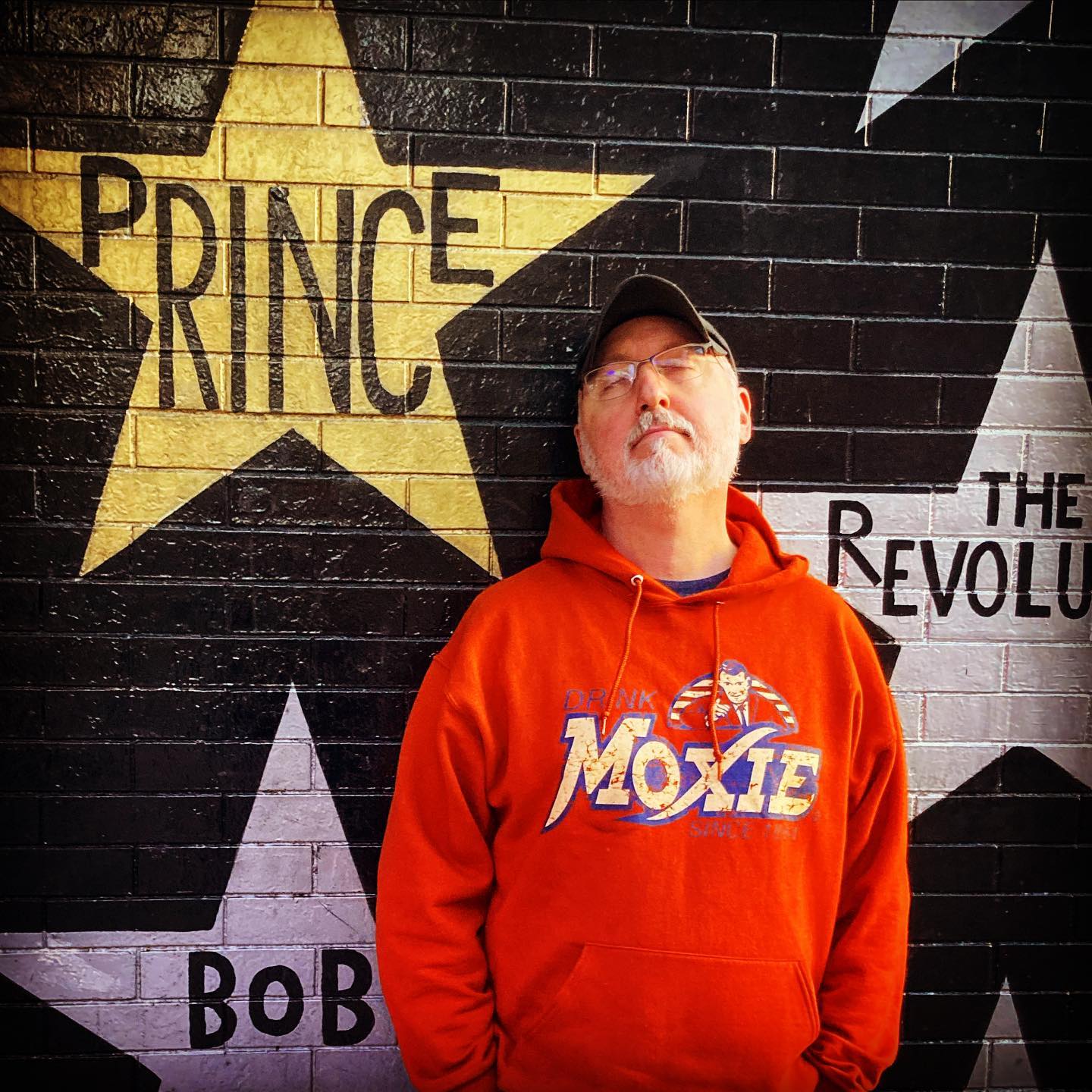
We also toured Paisley Park, and later, we paid our respects at George Floyd Square. It was a full weekend, thoughtful and productive.

And it brings us to the final week of classes for the semester, and for my degree. Like, really. That’s it. Monday night my playwriting workshop professor and I met at a local joint to have wings, talk about new pages, and plans for the future.

Thursday I turned in the final draft of my creative nonfiction essay, sticking the landing this afternoon around one p.m. That’s right, with four hours to go I had finally figured out how to end.

After class we headed to Lockview on Main Street to eat a lot of cheese and to unwind a little – not that the class had been stressful. A classmate asked if it felt anticlimactic and I said quite the opposite, I was very happy with my paper, and the entire class. It feels good to go out on top.

What’s next?

Saturday, November 19, 2022

Process LXXVIII

Actor-Teachers at Theodore Roosevelt High School
Suddenly, pages! I wrote ten pages of a new script in time for workshop on Monday. When I adapted those two Christie novels, I drew dialogue pretty much directly from the books. There is another way, of course. You can be inspired by the work and make the dialogue up entirely.

This is what Coble did with his adaptation of The Machine Stops (among several others) which we produced into a radio drama that premiered fifteen years ago this week, if you can imagine that. He created his own idea of the characters and what they might say.

True, Metropolis is a silent movie and the title cards do not offer much in the form of spoken word. But the novel does, though as it is a translation from German, it has a quality that is not quite like natural English speaking. First of all, because it’s German, it’s all verbs.

That’s a joke.

This week I also had the opportunity to make a few school visits, which was nice, traveling far afield, to Kent and also my high school alma mater. I have been so engaged with the "Christmas Carol" writing contest, I haven't seen as much of the actor-teachers as I would like.  

Always on my God damn phone.
Thursday night was our penultimate regular class for creative nonfiction – and the evening I had my essay critiqued, which was really special. The comments were generously positive, my professor called me "master of the walk-off line" for how I closed each section, and a few commented on how seamlessly I included dialogue, as though I were some kind of playwright or something. At the same time everyone provided me with so many critical observations and opportunities for revision.

Writing is rewriting, so they say. Good lord, how many times did I repeat that during the workshops I provided for the writing contest last month? The wife assures me one of my best attributes (as a writer, I am awesome in so many ways) is how I receive criticism and incorporate it into my work. 

This was not always the case, and like an actor who insists on explaining why they made the choice they are being asked to reconsider, I would also defend that what I had written the first time was absolutely correct.

It’s the most important lesson I ever learned in undergrad: “Take the note.

Saturday, October 22, 2022

Process LXXIV

Before/After
Good news! The screening was a success, and Playhouse Square and University Hospitals also have made streaming I Hate This: A Play Without the Baby available for free through the end of the month. Over four hundred viewers have seen it in just five days, and I hope to make it available to others in the future.

Interviews for workshop are winding down, which is good. I never intended the play to be just a series of individual monologues, I want to find common themes and even similar phrasing to braid them together into a chorus.

“Braided narrative.” That’s a term I learned in craft and theory last week. I Hate This is a braided narrative. It always has been.

And I need to continue plotting my adaptation. Let me rephrase that, I need to begin plotting my narrative.

This week I also enrolled for next semester, my last semester of grad school. What a remarkable feeling. Four months from now my thesis production will be in the rearview and really, that’s it. I don’t want to get too maudlin about this, but it truly has been enjoyable. How would I have survived the shutdown without it?

I have a little under three weeks to complete the first draft of my creative writing essay. I could expand that thing into a book. Or better yet, a play. Really. I like writing plays.

Saturday, October 15, 2022

Process LXXIII

Read all the way to the bottom for a special video announcement.

Is transcribing an interview writing? Is editing a transcribed interview creative writing? Is it not simply reiterating what was said? To date I have conducted fifteen interviews on the subject of women’s reproductive rights, spoken to a variety of women on the subject. 

And now I, one not born with a uterus, will edit these conversations into a play for performance on a stage.

Is this writing? And do I have the right to do this? Is it appropriate for me to compose a work on the subject of abortion when it does not affect me directly.

Of course, it does affect me directly. It affects members of my family and so it affects me. But it does not affect my physical person. Me, I am not threatened by this particular violation of civil rights, the right to bodily autonomy.

However, if I put forth the words of those who are – not my words, theirs – am I not doing right by them?

Workshop met in person on Monday night at a local tavern and before class started we spent about a half-hour, the three of us shooting the shit about David Mamet and August Wilson and ill-fated adaptations and whether or not a playwright should give any consideration at all to how some future director interprets their script I realized, “Oh! This is the class!”

We did read and received comments on the monologues we have created, and it does appear that progress is being made.

Also this week, I began to dig into the attic for my creative nonfiction project, reading letters my grandparents sent to each other during the early thirties, when my grandfather was a commercial sailor on the Great Lakes. Grandmother reported the several miscarriages she suffered during that time while he waxed poetic about the lakes and the many cities where they made port: Lorain, Detroit, Chicago, Duluth.

Reading my grandmother describe in details the physical manifestations of her losses, the week I Hate This premieres at Playhouse Square, and also conducting these many interviews about pregnancy and abortion have been overwhelming.

For example, before class on Thursday I was on my way across town and decided to stop in at an abandoned cemetery, seeking the grave of a child who lived an hour. Yes, I did.

Saturday, September 17, 2022

Process LXIX

“I still had all the afternoons in the world.” 
― Joan Didion, Goodbye to All That (1967)

This week I was introduced to the quote above, from Didion's legendary farewell to New York, or perhaps really to her twenties, and I have never imagined a more accurate turn of phrase to describe how one feels to be in their twenties.

After an unexpected interruption both of my classes are in progress and I no longer have any spare time, which is fine. I can just go back to saying no to everything.

Of course, it also helps if you have contracted Covid, which I have. Lucky me, it’s not as bad as I feared it might be. I cough, nights are difficult, I am achy and I wake a lot.

Monday night I was able to attend my first playwright’s workshop via speakerphone. The professor is really cool, he said he could run it all by me when I felt better, but like I said, there’s an awful lot to do and I’d rather not get behind on anything.

Without going into much detail, I am going to be able to use techniques from my creative nonfiction class on my first project in workshop. The man said I have to write a play that saves the world ― and go. I have a lot of people to talk to now to figure out how to do that.

Meanwhile, I am having a serious crisis of faith. This is compounded by my illness, and by the antihistamine I have been ingesting daily to quell my symptoms, and also the cavalcade of minor tragedies and disappointments which have befallen as a result of said illness.

I have had eye surgery, now Covid. I have been made despondent by weakness and dis-ability. I am sick and tired of being sick and tired.

This morning the wife and I watched Griffin Dunne's tribute to his aunt, the Joan Didion documentary The Center Will Not Hold. Last week I only knew her by reputation, now I have read a little of her work, seen her life, and fallen in love. I also have no excuse not to move forward, still.
“I don't know what I think until I write it down.” 
― Joan Didion

Saturday, September 3, 2022

Process LXVII

"Some craven scruple of thinking too precisely on the event."
- HAM IV.iv
My concentration is greater in the morning than the evening (whether or not I have been drinking) but time is short. That could be part of it. This week we had a 200 page text and I was constantly distracting myself.

"Why not skim?" she asks. Because I’m not good at it. Because I like to read, not process, information. And because my eyes, I guess.

But also! This particular text is a guide to creative nonfiction. And I realized I spent a lot of time ruminating over a potential subject for my paper and had to go back over the same paragraph several times.

Recently I dug up an archive video of the Cleveland Public Theatre workshop production of my solo performance And Then You Die (How I Ran a Marathon in 26.2 Years). It's not the best video, but the sound is all right, and it was good enough to get us into the New York Fringe in 2009.

I forgot how funny it was. This scene is about when I was twelve and had a crush on a character from the animated film Animalympics. I also forgot how much of this play is about my sexual interests. I have come to the realization that writing and performing this play was my midlife crisis.

Saturday, August 27, 2022

Process LXVI

Stop Making Sense
Interviewer: What are you going to do next?
David Byrne: A project with songs based on true stories from tabloid newspapers. It's like “60 Minutes” on acid.
Break’s over, back on your heads.

Last year, I regretted (only slightly) taking a summer course because I didn’t appreciate the idea of sixteen weeks of work crammed into six. But my, did I enjoy the time off once that was through.

Having the entire season without any classes, however, I feel mentally out of shape. No reading, no writing -- and that was before my eye procedure. But the days pass as days will and ready or not, school is here and the time is right for dancing in the sheets (of paper).

Fortunately, the last of the gas bubble which was put into my eye (to assist healing) disappeared the same day as the plastic medal band on my wrist, the one warning EMTs not to administer N₂O or to put me on a plane, finally cracked and fell off. Reading was suddenly easier, driving possible. I began running again.

Thursday night the semester began as I drove to Akron for my first class in a course on creative non-fiction. In spite of having autobiographical plays, these did not involve research. I wrote what I thought, from my own point of view. This is not creative fiction. Memoir, perhaps. Not the same thing.
Girlfriend Is Better
Shortly after obtaining an Apple Macintosh SE in 1990, I did what all callow young men do shortly before graduating college, I started to write the Great American Novel. That fall I drank 100 proof Southern Comfort, smoked cigarettes, and banged out my first book.

It was a recollection of a solo road trip I had taken the previous year, when I visited a former girlfriend with whom my relationship was undefined, and also to see my dying grandfather. Heady stuff. Great potential. Unfortunately, it read like a journal, not a novel, and the horrible truth was I wasn’t terribly interested in anything that was going on around me.

I was twenty years old. I was traveling through the deep South, to first reach Panama City, Florida, then onto Clearwater. And yet, I took the interstate, and not any two-lane roads. I ate at chain restaurants in service plazas instead of seeking local cooking. My erstwhile girlfriend was seeing one guy, and had her eyes on another (who would become her life partner) and I was a dull interloper.

When I did visit my grandfather, it was for one long afternoon in which neither of us said very much at all. He was in great pain, and I was terrified of that and of him. It was a pilgrimage I felt I ought to make, though I did not know why.

Road To Nowhere
Most of the narrative included my referring to other, better books, like Blue Highways, Still Life With Woodpecker, even Anne Rice’s Belinda. I quoted song lyrics which weren’t epigrams so much as hopefully evocative phrases taking the place of any original sentiment I was unable to have or create.

Basically, because it happened to me, I thought it was important for others to know about. I guess I’ve always thought that. I like to think I’ve gotten better at deciding which tales to tell, and how to tell them.

So, anyway, we’re not doing that this semester. This time, we’re telling other people’s stories. True stories.