Showing posts with label Metropolis. Show all posts

Saturday, December 3, 2022

Ten Theater Projects in 2022

"Here's To You, Mrs. Robinson" at Cleveland Public Theatre's Pandemonium
Sarah Blubaugh & James Alexander Rankin
Photo by Steve Wagner

Folks have asked, David! Why a degree in playwriting? Aren’t you already an accomplished, professional playwright?

No, the answer to that is no, I am not. I am a playwright with an obnoxious social media presence which might lead one to think I am successful, if they weren’t paying close attention.

The fact is, I have done lots of plays in the past, and they are good plays, but they are not great plays. One or two may be considered very good. And I have never had a production at a professional house. Apologies to all the theaters that have supported my work in the Cleveland area, no shade, but I would very much like to have a full production at an AEA house.

This year, however, I have had a large number of original pieces, generated through my graduate workshops and elsewhere, that have been workshopped or produced. It’s been a pretty remarkable year.

Hannah Woodside & Adam Harry
"The Ocean Breathes Salty"
(Convergence-Continuum, 2022)
1. The Ocean Breathes Salty (festival)

The year began with a ten minute play, as part of the NEOMFA Playwrights Festival, about miscommunication and loss, and that fucking bunny.

2. The Witches (workshop)

I learned so much through this process. Sometimes I bite off more than I can chew, and this was one of those moments. Let’s say my heart was in the right place, but I did learn to lean back a lot through this experience, and I like to think I managed it the best I could.

I like to think that it was this experience which was greatly influential on the very next script I would complete which brings us to:

3. Scenes From a Night’s Dream (reading)

Here’s the thing. I once wrote about what was important to me, personally. And I produced comic strips and short plays and full-length plays that told people what was important to a narrowly-focused straight, white man. These plays have always been, not surprisingly, more successful with straight white men than they were with people who do not identify that way.

Then, I chose to expand my point of view, and so began to write about people who were not like me. Some attempts were not successful, and in the case of The Witches (first drafted before the pandemic) I learned a great deal about that.

However, I have produced scripts in the past two years which I feel have worked because I do more listening than I used to. But I have failed, to date, to seek into myself for that which is within me that might be universal, relevant, and possibly dangerous. And where better to find what passes uncensored and honest than in a dream?

This will be my Masters thesis production at Convergence-Continuum in February, 2023.   

Falling
4. Falling (short film)

For my graduate level class in illness narratives, I created a short film that described the sudden decline of our mother, the text taken from my daily writings at that time. It’s not something I want to be made available for public viewing, but who knows? Maybe I’ll do something with the script one day.

5. Theater Camp

This summer we used my short plays as splash scenes for the middle and high school students to concentrate on, in addition to larger and longer pieces from Shakespeare. Some parents took offense to the “political” nature of some of the scenes, but if you think moral relativism humor is political, well, there’s not much I can do about that.

6. Forget About Me: The Breakfast Club Play (reading)

One of my recent works was tapped by the folks at Purple Rose Theatre for a Zoom reading, which was very exciting. People claim to be exhausted by Zoom but there were around one hundred fifty participants, which would be very impressive for a live reading! Their theater has a devoted following, and the company specializes in new works.

The cast, the director, the entire program was supportive, productive, and I hope I have the chance to work with them again some day in the future!

7. Here’s To You, Mrs. Robinson (Pandemonium)

It was a delight to return to Pandemonium, having previously provided a scene from The Witches, a work in progress at the time. I have a bad habit of submitting unhappy scenes to this event, which is supposed to be a party. I took great pleasure in presenting something which, while still entirely me, was funny, dirty, and transgressive.

Apparently the Dawson’s Creek joke went over like gangbusters during each of the three performances.

8. I Hate This: A Play Without the Baby (film)

This was a such a big deal. It had been a year and a half since principal photography, and to finally release the work to an audience was so important. It’s now being used by University Hospitals to educate teams of nurses and doctors about the effects of child loss on the parents, and I am so grateful for that.

After Roe
9. After Roe (reading)

The man said write a play that will change the world. I don’t know if I managed that, but I can say that so far this has been a remarkable experience, interviewing fifteen subjects and then braiding (there’s that word again) their stories together into what I believe is a compelling and important narrative. I will be submitting this piece far and wide in the coming weeks.

10. Metropolis (in progress)

Still in its formative stages, this is what I am currently working on. Using both the film and the novel as source material, to create a stage adaptation of the most inspirational science fiction film in history. If it makes any difference, H.G. Wells hated the movie, which relieves a certain amount of pressure.

Saturday, November 19, 2022

Process LXXVIII

Actor-Teachers at Theodore Roosevelt High School
Suddenly, pages! I wrote ten pages of a new script in time for workshop on Monday. When I adapted those two Christie novels, I drew dialogue pretty much directly from the books. There is another way, of course. You can be inspired by the work and make the dialogue up entirely.

This is what Coble did with his adaptation of The Machine Stops (among several others) which we produced into a radio drama that premiered fifteen years ago this week, if you can imagine that. He created his own idea of the characters and what they might say.

True, Metropolis is a silent movie and the title cards do not offer much in the form of spoken word. But the novel does, though as it is a translation from German, it has a quality that is not quite like natural English speaking. First of all, because it’s German, it’s all verbs.

That’s a joke.

This week I also had the opportunity to make a few school visits, which was nice, traveling far afield, to Kent and also my high school alma mater. I have been so engaged with the "Christmas Carol" writing contest, I haven't seen as much of the actor-teachers as I would like.  

Always on my God damn phone.
Thursday night was our penultimate regular class for creative nonfiction – and the evening I had my essay critiqued, which was really special. The comments were generously positive, my professor called me "master of the walk-off line" for how I closed each section, and a few commented on how seamlessly I included dialogue, as though I were some kind of playwright or something. At the same time everyone provided me with so many critical observations and opportunities for revision.

Writing is rewriting, so they say. Good lord, how many times did I repeat that during the workshops I provided for the writing contest last month? The wife assures me one of my best attributes (as a writer, I am awesome in so many ways) is how I receive criticism and incorporate it into my work. 

This was not always the case, and like an actor who insists on explaining why they made the choice they are being asked to reconsider, I would also defend that what I had written the first time was absolutely correct.

It’s the most important lesson I ever learned in undergrad: “Take the note.

Friday, November 11, 2022

Process LXXVII

This time two months ago, I was entirely at sea. Overwhelmed by my schedule, my assignments and suffering a bout of Covid. Now I am a writing machine, on top of my game, and I even had time to fold laundry and watch a movie.

Why did no one tell me Eyes Wide Shut is fucking brilliant? So 1999, though. What a time to be alive (unless you’re Kubrick.)

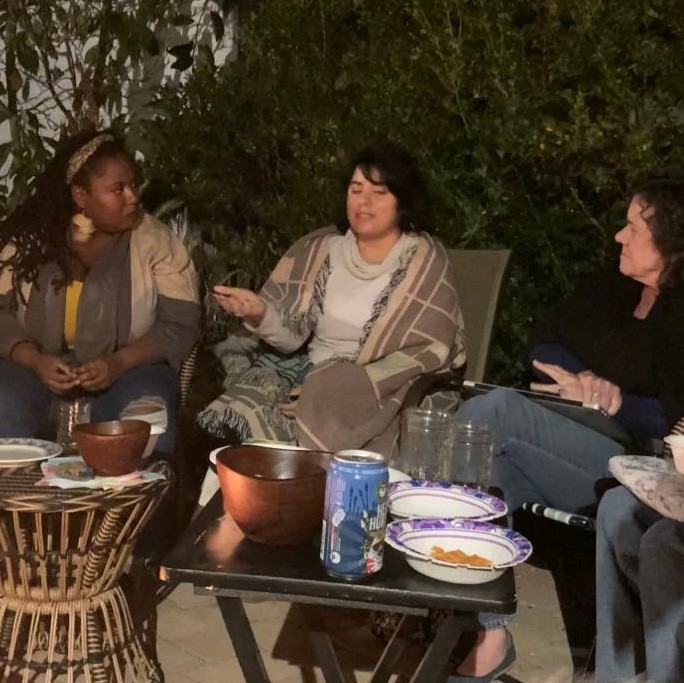
The first draft of my “Willows” essay has been turned in, we will workshop that next week. And we read After Roe in my backyard last week. Still need to work on that, but as far as class goes, it is complete. Focusing now on Metropolis. I have a structure, which is easier, I guess, when you know the entire plot. And yet. Anyway. Writing all day on Saturday.

Saturday, October 1, 2022

Process LXXI

Read all the way to the bottom for a special video announcement.

So, we’re reading. We’re reading a lot. The playwriting workshop is freewheeling; there is no assigned reading, but by the end of every class, I have two or three books or plays I want or need to read. I was reading the novel Metropolis, now I’m reading a play which is contemporary to that novel, Machinal by Sadie Treadwell.

I am also plowing through small press histories of a certain maternity hospital.

Also, recording promotional videos for the premiere of the film adaptation I Hate This at Playhouse Square.

Finally (okay, not finally) providing writing workshops to Cleveland city schools.

It’s a lot.

I am scatterbrained, putting down one book to pick up another, setting that down to make a note in one notepad (or the other notepad) or to jot down thoughts that itch the back of my brain, to put them here. To remember I was feeling like this when I get to the end of the week and trying to recall what happened.

I have missed drinking during class. We’re almost done here so I can say this. Taking classes on Zoom means you can drink. I know I’m not alone in this.

Tell me I’m not alone in this.

Saturday, September 24, 2022

Process LXX

“I feel stupid and contagious.”


Why didn’t anyone tell me Covid was difficult to live with? I am currently reading several books at once, which is good, I’m not usually good at that. The deadlines are coming and they will be constant, from one week to the next.

Did you know ..? The 1927 film Metropolis, directed by Fritz Lang, was adapted from a novel written by Thea von Harbou. It was first serialized and then collated into a book in 1925, though it was always meant to be the source material for the eventual film. This is one of the books I am currently reading.

I’ve been in love with the film since Giorgio Moroder released an abridged version with contemporary score in 1984. Some of the music is dated, very, very dated. Would not recommend someone watch this version for their first time. However, it is because of this version that I know and love this film, so I am very glad it existed, and when it did.

Moroder’s own compositions, however, are still entirely appropriate, most significantly the "Machines" theme.

  
One of the amazing things about early science fiction is that It does not, in fact, cannot rely on words or phrases we all know which act as a shortcut to our imagination. The word “spacecraft” automatically creates in the mind a picture, one of a self-contained vessel, most likely resembling in shape a nautical ship, set against a black sky festooned with stars.

So much of our modern storytelling is derivative in this way. Those who pioneered the craft of science fiction had their own images to work from, but quite often they were creating brand new images for the imagination, some of which can be quite confounding. Von Harbou’s novel for Metropolis is at times incomprehensible, at least upon first pass. I find myself going over passages a few times to make sure I am picturing what she intended.

This week has been very challenging, as I have been coping with the lingering effects of Covid, and also felt somewhat overwhelmed by all the assignments and responsibilities.

But wait – I had previously been lamenting my lack of deadlines, assignments and responsibilities. I just needed to remind myself how much I have been loving this. Grad school has given me life.

Sunday, July 18, 2010

The Complete Metropolis

Metropolis was directed by Fritz Lang in 1927, the legendary science fiction film which introduced so many elements to the movies, including the robot, the mad scientist with an artificial hand, and the big, ticking clock.

To describe the story simply, there exists in the future a great, glittering city where those of privilege (and to judge by its size, there are billions of them) live lives of luxury and glamor - none more so than Freder Frederson, the young, horny son of the Joh Frederson, master creator of Metropolis.

Of course, there are also untold numbers of Workers who toil break-free, ten hour days in soul-crushing, tedious labor to keep the machines which run the city alive. Or, really, to keep them from overheating. I mean, that’s what it seems most of the human element is responsible for, to keep the M-Machine from blowing up. Again.

They work below the city - they live even lower than that, never in their lives seeing the light of day.

Enter a young woman, named Maria. She arrives uninvited with a number of children to the palace of pleasure above, and shows the children how their “brothers” live. It is meant as compassion from below; we will someday be one family. But we must be patient and peaceful.

Before she is chased away Freder spies Maria, and is smitten. He disguises himself as a worker, witnesses one of her secular sermons on understanding and love, as she preaches that one day there will be a Mediator - the HEART which will unite the HANDS and the MIND.

There’s also a lot of business about a mad scientist and a robot.

Metropolis is an astonishing piece of work, and has fascinated me since the Giorgio Moroder cut in 1984, featuring a now-horribly dated pop music soundtrack. But I did see that at the Colony Theatre in a 70mm print on the last gigantic screen in Cleveland, now sadly no longer with us.

The story has been much-derided for its simplicity. Oh yes, class strife will end if only the heart can negotiate between the hands and the mind. Shut up. It’s either pro-union propaganda or an opiate for the masses, there is something infantile in the message for everyone to dismiss.

Except no one has ever seen the entire story, at least no one still living. Shortly after its release (83 years ago, my Lord) it was cut. At two and a half hours, it was much too long, detailed and had several subplots that could justifiably be cut to make it more commercial. There have been additions over the years, the most recent of which in 2002 which included something I had never heard before - a recreation of the original soundtrack from its score, which fits the mood and style of the piece better than the three other musical soundtracks I have ever experienced.

But according to the script (recovered from the German Censor’s office, mind you) there was almost a half-hour of material which was presumed lost forever.

In 2008 it was found. In Argentina. WTF? Badly damaged, a 16mm print existed which had passed from art house to private collection to storage. Last night I saw what is being called The Complete Metropolis at the Cinemateque. And it was a revelation.

A Revelation! Get it? That’s a pun!

While I do not believe it is necessary for Metropolis to be two and a half hours long, I believe it was cut poorly in the first place, and that the restorations (as poor in quality as they are - barring millions in cash, which no one would bother spending, the additions will always look scratchy and blurry) contribute subtlety, clarity and context which have been missing for over eighty years.

Edited, perhaps censored, are the more obvious religious overtones of the piece. Freder enters a church where we see statues of the Seven Deadly Sins, this we know. They appear in his fever dream when the Man-Machine is dancing at Yoshiwara. What we miss (and is part of two scenes which remain lost and will now no doubt never be recovered) is a monk preaching about the Whore of Babylon, and the coming Apocalypse. New footage includes the unnamed "Thin Man" (who appears briefly with Joh Frederson, but was otherwise scrapped, more on him in a moment) also part of Freder’s dream, as the monk, making the direct comparison of the Man-Machine with the Beast.

Freder is not merely the Mediator. He is Christ, come to save the world. Maria is some kind of John the Baptist character. Yes, it’s heavy-handed, but this whole movie is a parable, a futuristic parable, with ancient parables within it. The Tower of Babel tale that Maria tells has always been intact, but what is at stake is now glaringly obvious. The Man-Machine will incite the Workers to destroy Metropolis - which is the World. Freder has not been sent (and now it appears as though he has been capital “s” Sent) to negotiate peace between the managers and the workers, but to SAVE THE WORLD.

Meanwhile, other characters were more or less deleted, or their roles diminished. The Thin Man looks like Lurch for the brief moment we have previously seen him; when Joh Frederson sends him after his son. But now we see him threatening Josaphat in his apartment - smiling, fiendishly, like some kind of, I don’t know, German. While Josaphat squirms, he laconically puffs on a cigarette like some kind of, I don’t know, German.

There’s also the character of 11811 - who gets a name; Georgy. Freder takes the place of and switches clothes with this worker, and tells him to go to Josphat’s and wait. We never see him again, presumably because he’s some feckless worker. Certain editions of the film (like Moroder’s) features stills suggesting that he went to Yoshiwara’s. Worse yet! Feckless and a rake!

Now we see. We see him get into Freder’s car, in Freder’s silk clothes. Headed for Josaphat’s. He looks around the car. He does not look greedy - he looks in shock. This man was born underground. He’s always been underground. This is another world to him. He sees a woman in the next car, who smiles at him. He examines his person - his pockets have money. A whole lot of money. Cards advertising Yoshiwara’s drop from bridges above his head, through the open-topped auto. He is weakened, delirious, has to go there, if only for a little bit.

When he returns to the car, the Thin Man is there, and tells him to get back to the depths, and forget about Freder, or to suffer the consequences. And so he does.

But that is not all. Have you seen the film? Do you remember nearer the end when the Man-Machine (as Maria) is inciting the Workers to revolt, and Freder steps out to call it a fraud? The Workers attack him, he must fight off all of these men, when suddenly someone, some faceless prole, steps in on his behalf, and is stabbed.

That’s Georgy. That is a person. Most cuts exclude this fact, because we never got to see him chased away by the Thin Man. But he has a face in the crowd, which we remember. And he gets a death scene, which he deserves. He atones. He is sacrificed. He is forgiven. He is a man.

Editing is a good thing, really, it is. And there are places where scenes in this version could be cut (the destruction of the Worker City is much more horrible in its scope, and scary, and suspenseful ... and goes on too long) but the scenes which have been recovered are too valuable to miss. The Complete Metropolis is grander, richer in symbolism, more compassionate and meaningful than what anyone has seen before.