Showing posts with label playwriting. Show all posts

Tuesday, September 15, 2026

Trudeau & Doonesbury: A Biography: The Cartoonist Who Turned the News Into Art (book)

Garretson “Garry” Beekman Trudeau (b. 1948) is the single greatest influence on my life as a writer. There have been others who have inspired me in my work, from William Shakespeare to George Bernard Shaw to Annie Baker, and also from Charles Schulz to Harvey Pekar to Alison Bechdel. Because comic strip artists have had as much of an impact on my life as any playwright.

For example, John “Derf” Backderf just released The Dissidents, his first graphic novel since the epic Kent State (2020) and this is a work no less expansive in scope, for which its creator has been doggedly journalistic in his pursuit of historic accuracy. In this case the events are so far in the past (a century!) he has had to rely entirely – I assume – upon the written record.

I’ve read it, and like Kent State or My Friend Dahmer, it should be added to the long list of recommended (and also then probably censored) reading for high school students across the nation. It’s brilliant, it’s timely, it’s important.

But what about this Trudeau guy? He was the creator of Doonesbury, and in the late 1970s, while my preadolescent friends were getting a fantastic, exaggerated and exploitative history of Vietnam watching films like Apocalypse Now and The Deer Hunter on cable teevee, I was desperately consuming the history of the war and the entire “Me” decade by scraping up every single trade Holt, Rinehart and Winston paperback I could get my hands on at Baluk’s bookstore in Westlake.

A prized possession.
His comic strips were remarkable at the time because of the so-called political content. Sure. At that time, the comic pages were reserved for silly jokes about beleaguered husbands and shrewish wives. The war and the Nixon administration had been reserved for the editorial page, but when Trudeau was recruited (due to his work producing the strip Bull Tales for a Yale publication) to create a comic for daily syndication, he became the first to address contemporary issues – sex, drugs and the war – in the daily comics.

I mean, he wasn’t. He was preceded by Walt Kelly (Pogo) and Al Capp (Lil’ Abner) and others, but he was the first BABY BOOMER to do so, and to be so literal about it. The timing was not remarkable, it was inevitable. It could have been someone else, fortunately it was Trudeau.

Because of his wit. His very dry wit. Decades later, I would be taken to task for my work in the Ohio University paper The Post because I just wasn’t funny. But like so many other would-be college paper cartoonists, I was simply emulating the style of Doonesbury, how the punchline was usually the second to last line, only to be undercut by the deadpan reaction.

Doonesbury, October 26, 1970

And it is this deadpan, dry reaction to humor that has led people to hate and fear me in everyday conversation. And it is the same kind of dialogue I have always incorporated into my plays. This summer I read Trudeau & Doonesbury: The Cartoonist Who Turned the News Into Art by Joshua Kendall, the first authorized biography of G.B. Trudeau, and one of the first delightful things I learned was that, as a child, the future Pulitzer Prize winning cartoonist was an aspiring impresario.
At the age of eight, he waxed entrepreneurial, establishing the Acting Corporation, which marketed and produced his own plays in the family’s home.

“We transformed the basement into a makeshift theater, with bunk beds as our balcony," [Trudeau] says. "My mother had red curtains installed as a Christmas present … I jerry-rigged the most dangerous lighting board imaginable, and I almost burned the house down. I also built sets from canvas flats. Our troupe comprised relatives and neighborhood kids.

“I was a little dictator who controlled all the elements. I wrote and directed the plays, composed the music, designed the sets and costumes, oversaw makeup, props, etc."
(pp. 15-16)
He was a theater producer who became a cartoonist, I was a cartoonist who became a theater producer. And this should not be a surprise. Because they have so much in common. While I had entertained notions of playwriting in high school, I had no idea how or where to begin. Creating the strip Breaking Point my sophomore year in college, I was constantly thinking about and writing dialogue and action (essentially, scripts) for a cast of fictional cartoon characters which I would then draft and have published for an audience.

Breaking Point, May 27, 1988

Trudeau did something surprising, but necessary, when he chose to take a sabbatical in 1983, stepping away from the drawing board to rethink the strip. It’s all cool that Hi and Lois, Blondie and Dagwood, and the Peanuts kids never age, but Michael, Boopsie, Mark, Zonker, B.D. and the rest were ostensibly Baby Boomers – all of whom were for some reason still undergrads in the early 1980s. That had to change if the strip was to remain relevant.

However, it was a working vacation, as Trudeau returned to his first love – the theater. He partnered with Elizabeth Swados (Runaways) to create Doonesbury: A Musical Comedy which opened at the Biltmore Theatre in late 1983. It wasn’t a sensation (Frank Rich called it “pleasant”) but even if it were, it’s intentionally dated, set squarely in that interregnum between the queasy late 1970s and the go-go 1980s. I’ve never heard of anyone else producing it. But do I have the original cast recording on vinyl? Yes, I do. Do I have it on CD? Yes, again. I am partial to the opening track (“Graduation”) and Michael’s gentle attempt to court his girlfriend J.J. (“Get Together”).

 
The most significant result of this endeavor was actually a downscale, downtown spin-off (a friendlier locale for such things) a cabaret in which to skewer Reagan era policies on a rotating basis. This was a format more in line with the daily criticism Trudeau was conducting, anyway.
Trudeau and Swados undertook a second theatrical collaboration … "Rap Master Ronnie," a one-hour "partisan revue"... which premiered at the Village Gate in the fall of 1984. Frank Rich was more kindly disposed to this venture, praising Trudeau's "ingenious lyrics, the bristling polemical wisecracks and a sparkling cast."

Trudeau (said), “With 'Doonesbury? Liz (Swados) played in my world— a mainstream Broadway musical with lovable characters. But with Rap Master Ronnie, a downtown political revue with complicated characters, I was in Lizworld. I came to prefer the latter, scrambling for money and audiences, huddling behind the bar at the Village Gate, reworking numbers on the spot, the kind of on-the-fly theater Liz was so brilliant at."
(p. 215)
I can dig it. I love those things, too.

The Dissidents: Autocrats! Vigilantes! Communists! And Cartoonists! By John Derf Backderf (Abrams Books) is now available in hardcover.

Saturday, June 20, 2026

Theater Camp Writing Workshop (2026)

Theater camp has closed for 2026. An action packed eight days, full of theater games, stage combat, prop and set piece construction, costume design, more theater games, song and choreography, and a lot of playwriting.

We added the writing component after Covid, or rather, I did. I enjoyed leading a writing session for a different camp we were affiliated with in 2008 – the goal was poetry then, not plays, I had no idea what I was doing (I usually didn’t in those days, I was only forty after all) but the campers who responded to it went at it hard. Some kids love to write.

Some, however, would rather kick themselves in the face than write, and I respect that. And so, for our camp (collective our) I have insisted it be optional, presented opposite some other activity.

Most choose the other activity, which is fine. It’s preferable. This year it was at the same time as craft, and I had a dedicated crew of between four and eight for each one hour session – that was also different this season, an entire hour! And there was one period for high school aged campers, and another for middle school aged campers.

I had prepared prompt cards. We would create ten minutes of prompt-inspired free writing. Sometimes that would be followed by a debrief, or take another ten minutes to create dialogue inspired by the prompt. This was the challenge for the middle school aged campers, several of whom wanted to compose narrative. Creating action through dialogue was new to them.

As the days progressed, I would still offer prompts, but change up the assignment slightly – write a new short play based on your prompt-based free writing, or continue something you have already been working on.

They would ask, but can’t I write about -x- instead? And I would say yes. Can I work on something I was already working on outside of camp? And I would say yes. I had to remind them that this wasn’t school, I wouldn’t be collecting their notebooks, I wouldn’t ever be looking in their notebooks. They could write whatever they like. But I would continue encouraging them to write plays.

To that end I provided professional templates to follow, and we spent time talking about plays they had seen. I gave a brief description of the Aristotelian unities.

The last day, Thursday, we held an informal reading of their new works, with all of their peers as the audience. There were six or seven* short scripts, from the silly to sinister, and took volunteers from the entire assembly to stand and read and perform them to great appreciation and generous laughter.

Given the opportunity, I will expand on the material. It is challenging to develop a curriculum requiring this kind of deep focus when they are all sorts of variables that can be thrown at you. It’s a seven day workshop (six this year, really – we needed to catch up on props and sets on Wednesday) which has at times been forty-five minutes, then thirty minutes, and now an hour. Campers are asked to write for ten minutes then stop when some really want to keep going while others write for two minutes, get bored and start distracting their friends.

So, that’s a goal for next year, a more flexible lesson plan. But who wants to think about next year? Summer has only begun!

Monday, July 28, 2025

On Writing; A Memoir of the Craft (book)

Pengo's 2025 Summer Book Club

TL;DR: Write more. Read more.

I brought a couple of books with me for the trip, but when we visited the local library I was determined to get something and finish it before we departed. Ideally, I would finish it, get another book from the library and finish that before we departed, but I don’t want to get ahead of myself.

It’s not a very large library (it will get larger, more on that in a moment) but it is packed with tomes, and bestsellers, books with big names (literally) on their spines fairly leap off the shelf at you. I may have been gazing at the plentiful offerings from Maine-and-world legend Stephen King when I overheard another patron ask the women at the front desk for a copy of Hillbilly Elegy.

The former James David Hamel wrote one terrible book and became Vice President. It galls my kibe. I promptly turned away from fiction, faced biography, and found King’s On Writing; A Memoir of the Craft. It’s one of those books I have told myself I should read, and it was about damn time.

Here’s the thing; I’m a fan of Stephen King, the man, though not so much his work. But I like his writing. But I don’t care for horror or suspense. King was a constant presence of my adolescence; adaptations of his novels, films like The Shining, Christine, Cujo, The Dead Zone, they were on cable all the time, I didn’t watch them anymore than I watched any of the slasher films that were so popular at that time.

I did watch Creepshow, though, because it looked weird and I was delighted that it was funny. If I had given his work half a chance I may have appreciated King’s tremendous sense of humor in his fiction. And, of course, there is King’s own wonderful performance as Jordy Verrill in that film which made him an actual person in the world to me, and not just a name on a book.

It was my ex-wife, who loves all manner of fiction, who recommended I read The Stand, which I loved, but remains the only novel of his that I have read from the page. For long road trips, she and I would listen to the first three Gunslinger novels on audiobook, narrated by the man himself. It was because of this experience that I will never listen to an abridged audiobook. When possible, I prefer when it is read by the author.

I admire King. I should read more of his work. I am starting here.

"Jordy Verrill, you lunkhead."
Part of the book is autobiographic, “how I became a writer” stuff, but for much of the work he provides actual instruction (he has been an English teacher) not only on what constitutes good writing, but what and how makes good writing enjoyable to read.

King also advises the would-be writer – though you don’t need to be a writer to enjoy reading this book – on practice, which is very helpful. Much of this I know, or have my own personal opinions on, which I have come to in my own way and in my own time. But so much of what he says is true, practical, and useful.

He also repeats certain truths, because they are the most important, but so basic one might forget them in the details he also provides. You must read. You must write. You cannot be a writer if you are not reading and if you are not writing. If you don’t read, your writing won’t matter, and if you don’t write, you’re Fran Lebowitz.
 
“If you want to be a writer. You must do two things above all others: Read a lot and write a lot.” - SK

Keeping King honest is not only his own sense of humility, but he is also unafraid to, from time to time, call out those whose work he does not respect. He loves all kinds of writing, so unlike those who would call his work trash only because he specializes in genre fiction, he dislikes editing that is bad, regardless of genre.

He calls a few authors and their work by name (the book was published twenty-five years ago, so Hamel’s 2016 book is not included) because he believes you can learn by reading those, too, a cautionary tale on how not to write. Okay! I should read those!

King is also an arbiter of truth in writing. When asked about the origin of one of my plays, I said, something pithy like, “It’s all stolen, but it’s all true.” I don’t know how the latter justifies the former, but it seemed appropriate at the time. Making stuff up is what fiction means, but it needs to ring with honesty, and this, as the man instructs, is how you bridge the gap from “write what you know” to “here’s a story about swatting with a fungo on Jupiter.”

And this is as good a time as any to explain that while this non-fiction book was situated on a shelf at the Friendship Public Library opposite King’s fiction, I had to go to the woman at the desk to find it, I didn’t just turn around and see it. But I could have, and you would know, because it sounded true, took less explanation, and sounded like a boss move.

Tabitha & Stephen King
The big question, for me, was what lessons I may have taken from Stephen King for my playwriting. He emphasizes story above all else, and also that dialogue defines character, but in drama dialogue is story, dialogue is action. He says, “writing good dialogue is art as well as craft,” and that is certainly true, and never more so than in a play script.

One of King’s extended metaphors is the writer’s toolbox, and what is one each level of the toolbox. Vocabulary, for example, and grammar, on the top layer. Below that, the proper elements of style, like tense and adverbs (not adverbs ...) below that, structure – literal structure, like how to construct paragraphs.

As you can see, a playwright’s toolbox will be very different. It’s all a matter of which tools you use the most, and which you use less frequently. The first layer would be dialogue and character, the second layer stage directions – the necessary stage directions, which are different from the ones you write for the first draft of your script and later cut because they aren’t necessary and will only annoy the actor.

This is a tremendous exercise, and one I need to think through before continuing. The Playwright’s Toolbox. A quick Google search tells me someone wrote a book by that title and just last year, but that doesn’t mean I can’t create my own.

The most critical part of the book – to me – is when he cautions the writer about backstory. To wit; “The most important things to remember about backstory are that (a) everyone has a history and (b) most of it isn’t very interesting.” I have also been told, more than once, that a good play is about what is happening, and not about what has happened. Story telling can make a decent monologue, but any entire play cannot be about rehashing the past.

And I wonder, isn’t that what I do? Doesn’t that describe a lot of my plays? How much of The Right Room is couples talking to each other about their lives? And yet, I have seen how it is effective, that there is present action in story telling. Isn’t that why we love The Breakfast Club?

Finally, I was touched by the credit he provides his mother, and also his life partner. His mother, who worked her entire life, raising her children on her own, was supportive of his desire to write fiction from the very beginning. He also name-checks his several mentors.

But it is his wife, Tabitha Spruce King, herself a novelist, and also a poet, to whom he attributes his success, and not in some abstract, I couldn’t have done it without 'er kind of way. He is very specific about how, without her work, he would not be this highly visible, let alone successful, author. Not without her belief, her criticism, and her actions.

Monday, June 30, 2025

The Right Room | Cut Dialogue

We are deep into rehearsals for The Right Room, which opens (and, as it happens, closes) on Friday, July 18 as part of the BorderLight Theater Festival in Playhouse Square.

This is a new work, and because of that and also because it needs to fit neatly within a one hour timeframe, there need be editing. That is good. I like editing. The work is not done. Even when it is done, it is not done.

It is not surprising to me that dialogue between the two characters from the 1990s might have be a bit too ... trivial? Let's say dry. Or ironic, don't you think? And possibly unnecessary.

For time, and also comprehension, we cut the following exchange about infidelity.

Characters:
Steve (M, 26)
Aubrey (F, 24)

Time: Fall 1994
Place: A hotel room, Independence, OH

STEVEN
I do worry I am what they call a serial monogamist.

AUBREY
I don’t like that term. It sounds pathological.

STEVEN
Like serial killer.

AUBREY
Serial anything, like a radio drama.

STEVEN
A serial.

AUBREY
Yeah.

STEVEN
I’ve been eating a lot of cereal.

AUBREY
We’re the generation that can eat cereal for dinner.

STEVEN
Who waits for dinner?

AUBREY
I don’t worry about it, I think that’s a natural state for man to be in.

STEVEN
Serial monogamy.

AUBREY
Yeah.

STEVEN
I like the way you say yeah.

AUBREY
Yeah.

STEVEN
Yeah.

[Waving their hands:]

STEVEN & AUBREY
Yeah!!!

STEVEN
I could deal with the monogamy, it’s the cheating I can’t abide.

AUBREY
Don’t cheat, then.

STEVEN
The first time I heard the song “Tempted” I thought, oh! Cheating is a thing you can do.

AUBREY
I mean, there’s “The Piña Colada Song.”

STEVEN
Yeah! Or “Careless Whisper.”

AUBREY
Tipper Gore was right.

# # #

BorderLight Theater Festival presents The Right Room, a new play by David Hansen and directed by Jasmine Renee, July 16 - 19, 2025. 

Saturday, May 17, 2025

Here (film)

I'm staring at the asphalt wondering
What's buried underneath (where I am)
- Death Cab for Cutie, "The District Sleeps Alone Tonight"

Here (2024)
On a recent transatlantic journey, I had the opportunity to watch a couple films including The Northman, a re-watch of Spielberg’s West Side Story and also Bob Zemeckis’s adaptation of the graphic novel Here.

The film Here came and went last fall, cost $50 million to make and made $15 million at the box office. That it was based on a short comic from 1989 that I had found very inspiring at the time had piqued my interest, but the negative reviews kept me from seeing it. Recently, however, in describing my new play The Right Room to a number of people, one said the concept reminded them of this movie (which they had liked) and of course, that filled me with great concern. I will go into the comparison in a moment.

Like the 1989 comic and the 2014 graphic novel, both by Richard McGuire, the film depicts the corner of an American living room from one fixed vantage point. The camera never moves (until the very end) but the narrative moves back and forth in time, from the 1940s to the 1970s, back to the 1910s, forward to the 2020s, even further back to before the house was even built and even into prehistory.

The major failing of the film is that an in-depth narrative is laid upon it, and that this narrative is not terribly compelling. A young man (played by a CGI de-aged Tom Hanks) grows up in this house, and just as our vantage point is stuck in one place, so is he, confined by the expectations of his father, his inability to succeed in business, that in spite of having a loving wife (Robin Wright) and family, he is unhappy and cannot move on from "here."

The movie’s fatal flaw, however, is its score by Alan Silvestri, an award-winning composer, responsible for iconic themes found in wildly successful movies like Back to the Future and Avengers. You can hear them, right? Of course you can.

To Kill a Mockingbird (1962)
The Here score put me in mind of Elmer Bernstein’s legendary score for the 1962 film adaptation of Harper Lee’s To Kill a Mockingbird. The main theme to that film is like liquid nostalgia, at once sweeping and sweet, grand yet intimate.

The first time I read Mockingbird, I found the first half to be interesting but disjointed – a selection of unassociated small town tales. When the trial happens, however, all the elements of the first part come together to define what happens next. And Bernstein's music serves to underscore lost innocence that comes with seeing the world as it really is, while remembering what it used to mean to you.

The thing about the graphic novel Here is that it has no narrative, it is an abstracted rumination on the meaning (if there is one) of time and space, and our brief place in it. These moments sometimes turn back on themselves, as when a 20th century child plays with a plastic dinosaur in the same frame as an actual dinosaur from millions of years ago that once occupied the same space, or a young woman is offering a cocktail in the same panel as she, as a baby years earlier, is being nursed with a bottle.

The Here screenplay by Zemeckis and Eric Roth includes a few brief, abstracted moments like these within the larger narrative (the one defined by the the Tom Hanks character) but they clash with the movie's serious, dramatic tone, and come off not as humorous but obvious and heavy-handed, especially as they allude to recent events, like COVID or the BLM uprising.

Meanwhile, Silvestri's score keeps reminding us that this is meaningful, this is important. But all we are seeing is a number of (mostly white) people living, growing old, and dying. And while there is a common philosophical argument that death gives life meaning, death does not in and of itself give life meaning.

Here (1989)
A professor of playwriting once described to me what he called the “dead baby” plays. He had had a number of students – people in their late teens and early twenties – drop a dead baby into the narrative of their scripts, which he saw as cheap, unearned poignance, and he absolutely has a point. When I was a young man, I dropped suicide into the narrative of more than one project, and that was also sloppy writing, and thoughtless.

Death does not provide meaning, but it can inspire meaning.

My new play, The Right Room, takes place in four different time periods, and in four different rooms, but they are all hotel rooms (or three hotel rooms and one room in a boarding house) in four different cities. And it follows the story of one family, in these elements I can see how I was inspired by McGuire’s original 1989 comic Here.

In my first draft, there were four distinct scenes, which I have since braided into one continuous scene, and so four couples share the same room, all at once. And I like to think that meaning is revealed by the actions that take place in those rooms, by those characters. Not time, nor place, nor even death. That it is life that gives life meaning.


"Here," a student film by Tim Masick and Bill Trainor (1991)

Saturday, January 4, 2025

Assessment

Photo: Gabrielle DiDonato
Calendar year 2024 I made sixty-five submissions. There were nineteen live performances of my work in a variety of venues.

Fifteen years ago, I received a fellowship and branded myself a playwright. I had written plays, but I had not yet told myself, given myself permission, to announce to the world that this is what, this is who I am.

Like changing my name at age eighteen, not everyone I knew immediately accepted this change. They would recommend to me plays to perform in, because they knew me as an actor, or plays to direct, because they knew me as a director. They were not interested in my plays.

Even so, I was committed to becoming a successful, professional playwright. All I had to do was to get produced. That is what I believed, I just needed to get produced. What I really needed to do was to write plays.

I made a list, way back then, of plays I wanted to write. Stories I wanted to tell. Scripts that I wanted to bring into existence, where they had not existed before. It was not a short list. I wish I still had that list, but I believe it included subjects like George Michael, Three Globes, Eliot Ness, Grandfather’s Letters. I have written all of these plays.

I had a list of hopes, dreams of plays I might some day write, and I have written those. Since 2010, I have created a catalog of work, no fewer than twenty full-length scripts (and so many more shorter plays) several of which have been produced, even published.

It’s not a career, I cannot survive on the income I receive from the work. But there are those things that are under your control, and there are those things that are not. I have younger colleagues who are unimpressed when I lament about what I describe as my few successes. Because they have always known me as a playwright, that is how they see me and how they think of me.

For that fact alone, I should count myself a success, because that is something I set out to do, to redefine myself and how I am seen in the world, and I have accomplished that.

Saturday, February 17, 2024

The Dark Room (workshop)

Self w/Katherine Nash (Jan 2024)
So, the thing is, right … I’m kind of between writer’s groups right now? It’s not that I’m afraid of commitment, I just haven’t found the right ensemble of people to be with yet.

One great advantage of being a member of a writers’ group is that it creates for you a deadline. If you are on your own, you set your own timeline for creation. If you meet with colleagues – once a week, once every two weeks, once a month – you may be expected to produce a certain number of pages. And so you have a responsibility outside of yourself, you have homework.

Twenty or so years ago, my wife invited me to join her writers’ group. They met at the Case Campus Arabica (now The Coffee House at University Circle) and it was with this ensemble that I began work on what became I Hate This (a play without the baby). Sharing individual scenes from a larger work, as I was composing it, this was a new experience to me. It was a supportive ensemble and extremely rewarding.

Some years later, after this team had amicably parted ways, I tried starting a writers’ group on my own, which lasted two weeks. We had infant children and I wasn’t in the right place to be managing anything that would take up so much time outside of work. I didn’t want to run a writers’ group, you know? I wanted to be in one. I’d just ended a theater company, I still wanted to create things, I was done with running them.

By 2008, I had been invited to join the (former) Playwrights’ Unit at the Cleveland Play House, and that was when my work started to take off. We were required to bring ten pages every two weeks, and that’s when I really started writing them plays. I developed well over a dozen full length plays and several more short works before the Unit folded nine years later.

Since that time I have been a much more consistent writer, continuing to write plays on my own time. When a draft is complete, I will host a private reading to hear how it sounds and to receive comments. What I do miss, however, is receiving feedback as the work progresses.

So I have been going to the Dark Room.

The Dark Room is like an “open mic” for playwrights, to hear their work read aloud. It started about twenty years ago, a program of the (former) Cleveland Theater Collective, an organization created to foster and support collaboration between all area theaters.

Management and maintenance of the Dark Room was turned over to Mindy Childress Herman in 2007, John Busser signed on to co-manage two years later, and they have shepherded the program ever since, in various sites on the campus of Cleveland Public Theatre. It’s a free event, the second Tuesday of the month folks gather to have their work read, to read the works of others, or just to witness.

Paul Manganello (Feb 2017)
I’ve had the Dark Room as a repeating date on my Google calendar for years without ever attending. I mean, I had attended a couple of times. I can even remember them. I read a piece from And Then You Die (How I Ran a Marathon in 26.2 Years) in 2008. In 2017, I brought an actor from Michigan I was working with and he read a new work. But I didn’t make it a habit. I live in Cleveland Heights, it’s a Tuesday, I have kids, and so on. And I already had a writers group.

You know that list of things you say you’ll get to, but never do? Since our youngest headed off to school, I have found myself actually doing those things. And one of those things is the Dark Room.

There’s this thing I’ve been working on, I won’t go too far into it, it’s inspired by a lot of recent discoveries I’ve made, about my family, about my life. I got an idea for a structure, a family story told in reverse chronology. So I’ve been bringing pieces to the Dark Room since November, to read them in actual chronological order, to hear how folks respond to them, and the response has been pretty positive.

Better than that, however, has been listening to the other works. It's a good time! And the community, this Cleveland theater community, folks I see sporadically — or every fucking day on Facebook but that’s not the same, you know? I’ve grown accustomed to, or made myself accustomed to the familial solitude mandated by the quarantine, and I’ve always had a degree of social anxiety, anyway.

But sweet are the uses of community. I am glad for such company.

Special thanks to Mindy and John for their contributions to this post.

Saturday, December 16, 2023

Twenty Twenty-Four

Thomas Whitely Cullinan
Promotional Photo for "Hamlet"
Bad Epitaph Theater Company, 1999
Photo: Anthony Gray
The next year will mark the twenty-five year anniversary of many important events. 1999 was (literally) another century ago, and at that time I was at once wrapped up in some of the most exciting adventures and also in therapy.

Numbers are arbitrary. However, I was very unsettled at the time about the impending millennium, and hey, I guess my fears were entirely justified. But at the time I was engaged in creating a new artistic endeavor, Bad Epitaph Theater Company, which debuted in April with a production I insisted on calling The Tragical History of Hamlet, Prince of Denmark. With the recent passing of Tom Cullinan, I have been thinking more about that production than I have for a very long time.

I was also engaged in another sense, engaged to be married! My wife and I celebrate out 25th wedding anniversary this summer, and unlike Bad Epitaph, which lasted five years in fits and starts (or my first marriage, which barely lasted two) our romantic partnership has survived, thrived, blossomed, borne fruit … what I’m saying is that we are very happy in our life together.

A quarter century ago I had written one produced play, and I produced it. But since then have written fifteen more new works than have received a full production. It has been three years since my last, Savory Taṇhā (yes, a live zoom production counts, thank you very much) and so I am very glad that in 2024, Talespinner Children’s Theatre will produce my new play script, The Toothpaste Millionaire.

Ralph Hoopes & Tierre Turner
"The Toothpaste Millionaire"
ABC Afterschool Special, 1974
This will be an adaptation of the book by Jean Merrill (The Pushcart War) about a twelve year-old entrepreneur from East Cleveland. This is my first authorized adaptation, my Agatha Christie works were taken from her books in the public domain.

Published in 1972, Toothpaste Millionaire was a book I loved as a kid, because it tells my favorite kind of story; one of creation, promotion, and success. These were the same feelings I had in 1999, as the director and also marketer for a new theater company, producing what was at that time heralded as the “greatest poem” of the second millennium.

Millionaire is aimed at the late elementary school audience, kids aspiring to adolescence, it’s also packed with practical applications of math, and it’s also a history play, subtly acknowledging the mood of the times, and the shifting demographics in one American community.

We look forward, we look back. We always do.

Source: “Hamlet Alone, A Celebration of Skepticism” by Helen Vendler, The New York Times, 4/18/1999

Saturday, September 16, 2023

Acapulco Gold (book)

Pengo's 2023 Summer Book Club

I have always been in love with marketing. As a kid, I wanted to sell things. I don’t mean I wanted to make money (I’m still no good at that) I wanted to create product for others to acquire from me.

An artist does, too, but an artist is very particular about what they create. I wanted to make and to find an audience for things people wanted. I would design cereal boxes and candy wrappers. I made greeting cards. I wanted to be a graphic designer, I guess. 

I did try taking courses in design, at Ohio University, and at Kent. But I was never very successful. Mom said I should have gotten a job at American Greetings, and she was right.

I embraced my role making posters and other promotional materials for Guerrilla and Dobama. I was happier designing the posters for Bad Epitaph than I was directing the plays.

Long before becoming engrossed in the TV program Mad Men, which is ostensibly about the business of advertising, I had read a book in high school called Acapulco Gold by Edwin Corley. Written in 1972, it’s an in-depth description of one Madison Avenue advertising executive, told with the same kind of hard-drinking, hard-playing bravado of that aforementioned 21st century TV program, though this story focuses on the account of one firm working secretly to get the jump on federal approval for the recreational use of cannabis.

"Mind Your Own Business" poster
Guerrilla Theater Company (1994)
I drew this!
How would a commercial advertising firm promote weed?

The more amusing aspects of this fable set aside (are they amusing? I cannot tell if the casual racism, sexism and homophobia exhibited by the main protagonist is meant to comment on the mores of the time, or the author’s actual sensibilities and does it make any difference) as a teenager I was largely compelled by the occupation itself – how to create a campaign for the product.

Currently, I am writing the adaptation of a book, a different book, a book for children, and it also tells the story of a product (to be sure, an entirely different product) from first idea to development to marketing and national exposure. 

This children's book is tightly focused on the mission to succeed and how, as is often the case, the effect these decisions have on the lives of those around the actors involved can get lost. Capitalism creates many orphans.

Sunday, April 16, 2023

Ohio State Thespian Festival (2023)

Painesville (2023)
Paul Feig tells this great story in his memoir Kick Me about how, as a high school student, he volunteered to announce a home football game. He loved the sport and also thought of himself as witty and a good talker and of course, he was entirely unprepared and the whole evening was a fiasco.

The first time I led a workshop at a Thespian conference (they used to call it a conference) was as a college freshman. I was going to teach improvisation, and this was also a fiasco. I imagined myself as this elder statesman of theater, with plenty of wisdom to provide. But that was, in fact, entirely in my imagination.

Looking out over the gathered and interested Thespians, I saw people my age – I was still only 18, after all – and they were not impressed with my attempts to engage them in acting exercises, because, like Paul Feig, I was entirely unprepared. I had no lesson plan, and as I spoke my voice rang hollow, drifting to the ceiling of the band room in which we were working.

I thought I had something to offer, but hadn’t given a moment’s consideration as to what that might be. That was thirty-six years ago.

Hilliard (1994)
Four members of Guerrilla Theater Company led a workshop at the state Thespian conference in Hilliard in 1994 called “Adjustments: Surviving the Rehearsal Process.”

(Photo: Torque ignites the imagination.)
“Students will work with scripted material written by GTC members… with the GTC members taking the part of directors. The focus of this project is to get the student actor used to the notion hat no part of character is meant to be performed in a specific or “right” way, and that the process of discovering the character requires concentration, imagination, and most importantly, the ability and flexibility to try a lot of different choices before settling on one."
To wit; we were teaching acting. I don’t remember much about the day except it felt like there were more of us in the room than students.

In 2020, the state conference was canceled (of course) and plans were set in motion for how to engage motivated Thespians in creating something "virtual" in place of a conference in 2021. Great Lakes Theater arranged for online workshops, and Chennelle Bryant-Harris as the primary organizer and director for those, while I played a small role as script coordinator.

Virtual (2021)
The All-State show that year was the live-streaming of that video, Time Capsule. My main contribution was the suggestion that the song one student wrote and performed, extolling all the hopes and dreams this teenager had for the year 2020, which was written to open the show, be put at the end. It was a brutal conclusion, and I stand by it.

Because the State Thespian conference is supposed to be one of those transformative events in the life of a young theater artist. Our high school hadn’t attended one until my junior year (1985) and then because it was being held in the next city over, in Rocky River. We all loved it so much, we asked to attend the next year’s, which was held at Fairborn High School, outside Dayton.

It was at that festival that I met at least a half dozen or more high school seniors who would join me as a freshman at the Ohio University School of Theatre that fall. The All-State show was The Crucible the first time I had seen it. I took workshops in improvisation and audition, and saw several one-acts and cuttings from full-length plays. It was thrilling. It was intimidating.

This weekend the Ohio Thespian Festival was held at Riverside High School in Painesville, and the offerings have been nothing short of epic. Yes, there were fully staged performances of not only Rent and The Prom, but also (ta-da) the Cardinal High School production of The 25th Annual Putnam County Spelling Bee which was first pulled by the school, and then reinstated after the controversy became national news.

The All-Ohio Show on Friday night was Moon Over Buffalo, and the students also received an hour-long talkback via Zoom with playwright Ken Ludwig and – as if that were not enough – a live presentation and Q&A with composer Andrew Lippa!

Hilliard (1994)
As for me, I offered a playwriting workshop called How to Write a Play a Day, for which I tried not only to describe the techniques I used to write every day, but to address issues like writer's block, and how to develop small ideas as well as big ones.

(Photo: Tower rocks the 90s jeans.)

Pre-pandemic, I once offered a forty-five minute writing workshop at a regional conference, which I wasn’t satisfied with. There was no time for writing, just talking about writing. So I asked for a ninety-minute block, which was a little presumptuous. With so much to see and do, I knew it was asking a lot from the students. But then I also figured, not all kids are actors, dancers, singers, directors or designers. Some of them want to be writers. I was there for them.

And they were there, and we wrote, and read what we wrote, and even then it didn’t seem like we had enough time. But in that good way, you know?

Saturday, March 4, 2023

The Great Globe Itself (revisited)

"I'll come in again."
Recently I have been digitizing a lot of materials at the office. That includes the prompt books for outreach tours, going back decades, a number of which I have written.

So, yes. I have been lingering over my old scripts, because they're interesting. They include sound cues, stage directions — and edits. Lines that were added, lines that were cut, lines that were changed.

These changes would make their way into the final draft of my script. But one line change caught my eye, from The Great Globe Itself, first produced in 2015. It's a significant edit, because it answers a question, central to the third act, which I had failed to address when we started rehearsal.

"They come to hear the gods, not me."

I checked the version I had posted to New Play Exchange and was surprised to find that I had not included it in the final draft. All the other changes were there, but not that one. It makes a difference, and I'm glad I caught the mistake.

"The Great Globe Itself" is available at New Play Exchange, or contact me directly.

Friday, December 2, 2022

Process LXXIX

The week before Thanksgiving, always brief and yet fully-lacked, consisted of playing Emcee for the annual writing contest (our first writing contest matinees since 2019) and preparing for a train ride to Minnesota which unfortunately did not come to pass. Our eldest arrived in town with a terrible stomach bug, and so they and my wife remained at home while the boy and I caught an impromptu flight to the Twin Cities, to spend the holiday with my brother and his family.

I also took in-between moments an opportunity to further edit After Roe, and think a lot about my final revision for creative non-fiction. To that end, my brother and I drove to Vermillion, the birthplace and final resting place of the woman we believe is our grandmother. It was a poignant, instructive and also inspirational visit. That night I also had the opportunity to meet some new relatives, which is to say they were new to us.

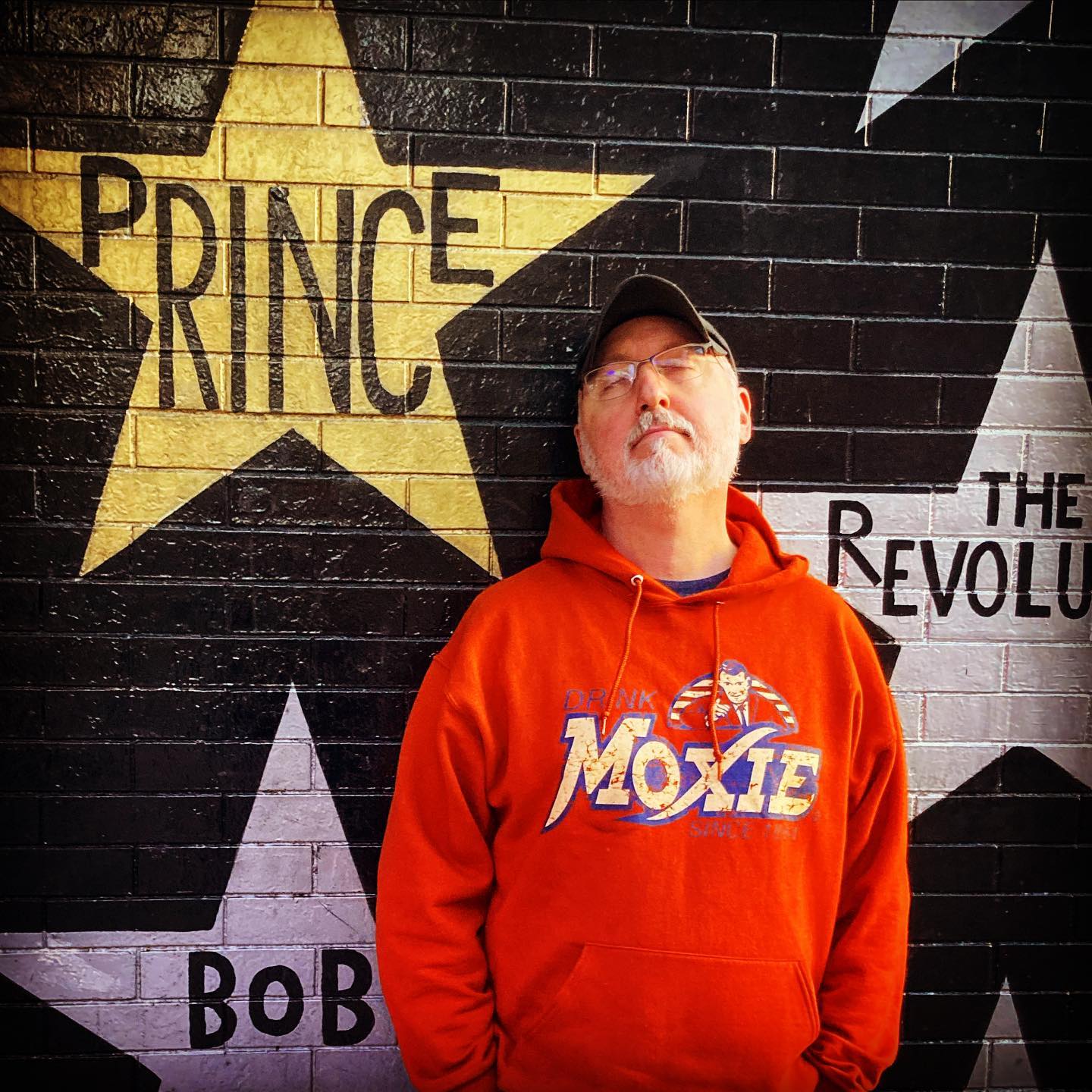
We also toured Paisley Park, and later, we paid our respects at George Floyd Square. It was a full weekend, thoughtful and productive.

And it brings us to the final week of classes for the semester, and for my degree. Like, really. That’s it. Monday night my playwriting workshop professor and I met at a local joint to have wings, talk about new pages, and plans for the future.

Thursday I turned in the final draft of my creative nonfiction essay, sticking the landing this afternoon around one p.m. That’s right, with four hours to go I had finally figured out how to end.

After class we headed to Lockview on Main Street to eat a lot of cheese and to unwind a little – not that the class had been stressful. A classmate asked if it felt anticlimactic and I said quite the opposite, I was very happy with my paper, and the entire class. It feels good to go out on top.

What’s next?

Saturday, November 19, 2022

Process LXXVIII

Actor-Teachers at Theodore Roosevelt High School
Suddenly, pages! I wrote ten pages of a new script in time for workshop on Monday. When I adapted those two Christie novels, I drew dialogue pretty much directly from the books. There is another way, of course. You can be inspired by the work and make the dialogue up entirely.

This is what Coble did with his adaptation of The Machine Stops (among several others) which we produced into a radio drama that premiered fifteen years ago this week, if you can imagine that. He created his own idea of the characters and what they might say.

True, Metropolis is a silent movie and the title cards do not offer much in the form of spoken word. But the novel does, though as it is a translation from German, it has a quality that is not quite like natural English speaking. First of all, because it’s German, it’s all verbs.

That’s a joke.

This week I also had the opportunity to make a few school visits, which was nice, traveling far afield, to Kent and also my high school alma mater. I have been so engaged with the "Christmas Carol" writing contest, I haven't seen as much of the actor-teachers as I would like.  

Always on my God damn phone.
Thursday night was our penultimate regular class for creative nonfiction – and the evening I had my essay critiqued, which was really special. The comments were generously positive, my professor called me "master of the walk-off line" for how I closed each section, and a few commented on how seamlessly I included dialogue, as though I were some kind of playwright or something. At the same time everyone provided me with so many critical observations and opportunities for revision.

Writing is rewriting, so they say. Good lord, how many times did I repeat that during the workshops I provided for the writing contest last month? The wife assures me one of my best attributes (as a writer, I am awesome in so many ways) is how I receive criticism and incorporate it into my work. 

This was not always the case, and like an actor who insists on explaining why they made the choice they are being asked to reconsider, I would also defend that what I had written the first time was absolutely correct.

It’s the most important lesson I ever learned in undergrad: “Take the note.

Monday, November 7, 2022

After Roe (reading)

The summer of 1993 was challenging. I was pretending to be an edgy, underground theater producer in downtown Cleveland, at the same time negotiating the purchase of a home in suburban Cleveland Heights.

In the shadow of the nationwide Operation Rescue protests that threatened abortion clinics here and elsewhere we staged a feminist production of The Taming of the Shrew.

I know. Anyway.

The company was about to embark on our second season of late night political short plays, which involved not only moving to a new location up the street, but also renegotiating the commitment of our company members.

A few of our original members had gone, others chose this moment to depart. One person in particular, we sat down to discuss elements of production and just exactly how we decided what pieces would be in and which would not.

This guy asked, “What if I wrote a pro-life play? Would that be voted on?”

We said no. Our company, the company we founded, would never allow a message that stands against a woman’s right to reproductive choice to be expressed on our stage.

The guy said, “That answers my question.” And we all shook hands and he left the company.

Later that year I would write a play called, RU-486? Yes, I am! about the abortifacient which would later be known as mifepristone. The national debate was whether or not such a drug may legally be administered and I wrote a monologue for a woman who was grateful that it was now available for others even as it arrived too late for her.

I created those words for a person with a uterus to read. On this subject, however, I think it is time to listen. I have written a new play, for which I have not created a single word. They were all spoken by women, and I wrote them down.

Sunday night we had a reading around a fire bowl in the backyard of that same house I bought twenty-nine years ago. Fourteen different voices (this time) shared the piece which we are currently calling After Roe.

Our discussion afterward was very promising. They liked “hearing from women who are on the periphery” and that it goes to show that every abortion is a case-by-case situation, just like everything else in life.

As I was editing the piece I “braided” the dialogue (braided, that’s my new word this semester) so that there was a flow to the piece which involved common themes and events. Most agreed they wanted more of that, for longer passages to be broken up even more, that the strongest moments were when women appeared to be responding to each other, even as the source material consists of individual interviews.

Comparisons were made to The Exonerated, Fefu & Her Friends and the Punchdrunk production of The Burnt City. When the discussion came to staging I said I’d like to see a nice living room, and that each “character” has a drink and stands (or, who knows, sits) to tell their story – which invited a comparison to the first scene of Top Girls. Extra points for a Churchill reference!

We had taken a break around the forty-five minute mark (the reading was 75 minutes) to set and light a fire. While I was getting things together, the readers were all actively talking and laughing. In spite of the relative brevity of the piece, I’m thinking having a break at that point, when things are just ramping up, might be a very effective way to spur discussion.

That’s what we call an intermission, but still.

During the second season of Guerrilla Theater, one of our members wrote a wistful piece about lost potential. It was a monologue written from the point of view of, I don’t know. A soul? A potential life which was unrealized due to an abortion.

The playwright Wendy McLeod wrote a full-length play called The Water Children that included a similar premise. A woman who had an abortion is haunted by a potential son she did not have, named Chance.

I know. Anyway.

However, MacLeod was addressing the thoughts that women do have when they choose abortion. And she is a woman. It is apparent that Chance represents feelings of doubt or regret, and not an actual spirit.

I pointed out to our playwright, who was a man, that his monologue, as thoughtfully written as it was, was a pro-life argument. It gives agency to an embryo, complex thought, self-determination. He said he hadn’t seen it that way, that he just was trying to look at the argument from a different perspective. I said I wouldn’t permit it. The piece was withdrawn from consideration.

There was a lot of active listening to After Roe Sunday night, as so many stories and details were being thrown about by the legal and medical experts, and individuals who were sharing their stories.
“At times I was confused, but also excited to be informed.”

“This information is not something we are taught.”

“We do all know this, saying it out loud is the new part.”
One very important question regarded what happens after the play has concluded. “What do we do with this?” Having a post-show talk seemed inadequate. What would be provided, in the form of contact, right there in the theater, following a potential reading? “You want to become an activist, a doula, a counselor? Here’s how.

The piece is still rough, there were details I missed, some stories can be tightened, others need to be expanded. And there is one more interview I need to conduct, and I am looking forward to that.

Saturday, November 5, 2022

Process LXXVI

So, I was feeling like I was getting seriously behind in my work and spent all of Sunday and Monday editing the new script for Oatman’s playwriting workshop and by class I had completed a first draft of what I am currently calling After Roe.

What’s crazy is that it actually works.

During my interviews I was asking everyone the same few questions and I was concerned that all the subjects would end up sounding the same. Not only did that not happen (and why was I concerned that it might) but as a result there were several places where they dovetail nicely together, creating what almost sounds like a conversation.

The man thinks I need more hard-edged voices. I’m not sure I can do that. The thing I have decided is that this is not journalism. This is advocacy. And presenting strong voices of opposition, well, first of all, fuck those people, but also, I should inevitably make them sound like assholes and I have enough integrity not to do that.

Am I preaching to the choir with this endeavor? No, I am not. If anything, I am providing an education to those who may not have a broad understanding of the subject, including those who already support the issue.

Which is to say, I spoke with a lot of very intelligent and thoughtful people. It’s their words. I just put it together into an entertaining evening.

Monday I also received certified documents from the state of Ohio which I sent right back out to Jackson County, Missouri. The question now is whether or not I get what I am requesting before the end of the semester. It’s kind of a big deal.

Saturday, October 29, 2022

Process LXXV

We voted. OKAY?
I was telling someone the other day that my stress level had dropped considerably since we had last communicated a few weeks ago. Then, thinking about it, I realized that is not true.

Just because I do not feel fucking insane does not mean I am not anxious. And there is a lot to be anxious about. We voted on Wednesday, which was cool, that we can still do that. Vote early, I mean. As a white man in America my ability to vote has always been guaranteed.

See? And like that, I am in a spiral of insecurity and doubt about the state of the nation. I weighed the pros and cons of leaving Twitter and it’s not even close. I am hoping that will bring down my stress level, which is, I realize, actually high.

We are negotiating issues regarding my thesis production.

I am waiting by the mail for certified copies of vital certificates.

Yesterday was the deadline for the A Christmas Carol Writing Contest and so I had a lot of data to process and deliver.

"The Thin Place"
by Lucas Hnath
(Dobama Theatre, 2022)
I have this crazy idea that I might have a draft of my Roe/Dobbs play prepared by the end of the weekend.

(If we were still living in the aughts I would name that play Roe/Dobbs, didn’t all plays have a slash mark in their title for a while?)

Creative nonfiction workshop went well, only now that the season has turned I am driving home in the dark and I hate that. The vision in my left eye is blurry and night driving has become fraught.

Friday night I watched a play. The Thin Place at Dobama Theatre. It reminded me that the best thing I can contribute to the art of theater is my attendance.

And that's it, for the week. Okay? Okay.

Saturday, October 22, 2022

Process LXXIV

Before/After
Good news! The screening was a success, and Playhouse Square and University Hospitals also have made streaming I Hate This: A Play Without the Baby available for free through the end of the month. Over four hundred viewers have seen it in just five days, and I hope to make it available to others in the future.

Interviews for workshop are winding down, which is good. I never intended the play to be just a series of individual monologues, I want to find common themes and even similar phrasing to braid them together into a chorus.

“Braided narrative.” That’s a term I learned in craft and theory last week. I Hate This is a braided narrative. It always has been.

And I need to continue plotting my adaptation. Let me rephrase that, I need to begin plotting my narrative.

This week I also enrolled for next semester, my last semester of grad school. What a remarkable feeling. Four months from now my thesis production will be in the rearview and really, that’s it. I don’t want to get too maudlin about this, but it truly has been enjoyable. How would I have survived the shutdown without it?

I have a little under three weeks to complete the first draft of my creative writing essay. I could expand that thing into a book. Or better yet, a play. Really. I like writing plays.