Showing posts with label inspiration. Show all posts

Friday, April 25, 2025

Magnolia (film)

 
While I was recuperating from eye surgery, a friend offered to bring dinner and suggested we watch a “comfort movie” which was a wild concept because while I understand that other people have their comfort movies (our eldest, for example, relies upon Moana) I usually spend movie time finding something new, something I have never seen before.

This is not to say I don’t watch movies more than once, of course I do. I think I saw Ghostbusters in the theater around ten times. I have a DVD collection, not a large one, but it includes many discs I buy just in case – just in case I have the opportunity to share them with someone else. Not to sit and watch them on my own.

So, what title? What movie? I chose Paul Thomas Anderson’s L.A. epic Magnolia. Hadn’t watched that in maybe fifteen, twenty years. I first saw this movie in early January 2000, when it was in general release. I saw it with both of my brothers, which was a rare treat. But we’re all movie guys with opinions, and at one point in the film, I had a startling moment of self-awareness.

"This is something that happens."
The film has great momentum, after an extended narrated introduction on the nature of coincidence and the importance of storytelling, the plot whipsaws from one storyline to another, which are at first seemingly unrelated but are soon found to intertwine.

About half way through I thought, “Oh, no. I’m loving this, but we’re having dinner after – what if my brothers hate it?” Long story short, we were all impressed.

Sharing it with my friend, someone much younger than I, in 2022, was another revelation. I know what it’s about, it’s about fathers, the sins of the fathers, about toxic masculinity in general. That is the central theme, and one which resonated more deeply with me now that I am a father myself. I’m not sure what my young colleague thought. I find that many young people prefer not to engage with such issues, not as entertainment. Horror films, sure, but not dramas which depict ordinary men doing everyday, terrible things.

Moving forward a few years, I have also now shared Magnolia with our son. We watch movies together, he knows it’s important to me. And while he did enjoy the film, he wasn’t so sure about the song.

Yes! The song. About two-thirds of the way through this three hour movie, when every major plot thread has risen to a point of no return, and every character is at their most isolated (two of them are actually on the verge of death) the song “Wise Up” by Aimee Mann begins, and every character sings along. There is no explanation for this moment, it simply happens. The entire song plays, and everyone takes a lyric.


This comes right after hospice nurse Phil Parma (Philip Seymour Hoffman) administers a coma-inducing level of pain reliever to his charge Earl Partridge (Jason Robards), a moment which hits differently once you have also made a like decision for one of your parents.

The song was always controversial. Janet Maslin, for example, writing for the New York Times, found it to be a horrible mistake. “It's astonishing to see a film begin this brilliantly only to torpedo itself in its final hour.” This is a widely held opinion, though I naturally disagree. For me, it is space to breathe, to sit with the characters for a moment before we charge into the rest of the narrative, which is about to go absolutely batshit.

Melora Walters in "Magnolia"
Also, I like singing. I like songs in movies, I like songs in plays. I once directed Shakespeare’s Henry VIII, in which the discarded and despondent Queen Katherine says, “My soul grows sad with troubles,” and urges her bard to: “Sing, and disperse 'em, if thou canst.” In this modern dress production, her assistants perform a karaoke version of “Somebody That I Used to Know.” There were some giggles from the crowd at first, which were dispelled when they realized, “Oh, my God … are they going to sing the entire thing?”

Of course we were. Why wouldn’t we?

My new play, The Right Room, is about four couples, in four different Midwestern hotel rooms, in four different years during the 20th century. The action plays concurrently, in the same room, each couple unaware of the others. Except when they break into song two-thirds of the way through. Did I steal this idea from Magnolia? Of course I did. I also stole it from Caryl Churchill’s Cloud 9. I steal from all sorts of places, because I am a genius.

What song, you might ask? The classic "If You Were a Train" by Buddy Langston. From Wikipedia:
Buddy Langston, a soulful saxophonist, rose to fame in 1930s Kansas City, blending blues and swing into electric late-night sets. A self-taught prodigy, his smoky solos enchanted crowds at the 12th Street Reno Club. Langston's bold improvisations influenced generations, securing his legacy as a cornerstone of early American jazz history.*


Why a song, you might ask? From my stage directions:
The song is an opportunity for choreography through which characters who do not otherwise speak to each due to the limitations of time and space to engage.
Will it work, you might ask? Well. Maybe this summer I will have the chance to find out.

Source:
"Entangled Lives on the Cusp of the Millennium" by Janet Maslin, The New York Times (12/17/1999)
Wikipedia: Buddy Langston

Monday, February 10, 2025

Henderson's Relish (condiment)

Henderson’s Relish is a condiment produced in and largely consumed in that part of South Yorkshire they call Sheffield. Not trying to start a fight with any native Sheffielders but this Midwest American would absolutely, in an attempt to easily communicate its flavor, compare it to Lea and Perrins Worcestershire sauce.

However, unlike that unctuous seasoning, Henderson’s does not include anchovies, so not only is it gluten free, it is also a vegan condiment.

The musical Standing at the Sky’s Edge is set in Sheffield, and includes a scene in which several folks in one apartment in the Park Hill estate partake of and comment upon a bottle of Henderson’s. It’s a reference which amused the West End audience I was a part of, which suggested to me it was a local delicacy, but known enough to humor the rest of the country.

Thing is, though, the scene in which the same bottle is commented upon, it is in fact being passed around by three parties who are unaware the others are there. It is mocked at a party in the 2010s, received with minor disgust by recently arrived Liberian refugees in the 1980s, and liberally splashed onto dinner by a miner in the 1960s.

Last week, I was having coffee with someone I hadn’t seen in some time. They asked me what I was working on and when I told them it was about three generations of my family, all taking place at the same time in one hotel room, he asked me if I had seen the movie, Here.

I said I had not, but that was familiar with the graphic novel. And he’s not wrong, because I do believe McGuire’s original version for that was printed RAW (see Here: graphic novel) had a profound effect which stayed with me. But he also could have said it reminded him of Standing at the Sky’s Edge.

Here’s the thing, I am going to be transparent about this – which is odd, because I don’t generally like to talk about the writing while it’s happening, before it’s produced, and I'll tell you why. On more than one occasion I have had conversations with critics and found my words used against me in their write-ups, and that's irritating, you know?

So, what I am currently working on is actually a play my mom wanted me to write years ago. She found my grandparents’ love letters from the early 1930s, and thought they were lovely and that there might be a play there. And they are lovely, but I found no obvious plot.

They were source material, however, for a paper I wrote in pursuit of my MFA a few years back, after she passed, and I began investigating my ancestry in earnest. And that paper led to an actual play script, one which took place in four different hotel rooms in four different years.

It may have been the comic strip that inspired the scenes running concurrently, and maybe it was the musical I had recently seen. There’s a song in my new script, too, an idea which I may have intentionally or otherwise stolen from Cloud Nine or maybe the film Magnolia. All I know is that I needed a song there.

Anyway, I recently ordered a four pack of Henderson’s Relish. It was a lot cheaper to get the four pack, and I did wonder how long the other bottles would be sitting on the shelf, but we’re almost done with the first one. I put Hendo’s on everything.

Wednesday, January 22, 2025

Here (graphic novel)

"Here" by Richard McGuire
Pantheon Books, 2014
While at school, I was introduced to alternative comics and the then-emerging concept of the “graphic novel.” I’d been into superhero comic books since I was ten, I was even a hanger-on in a specific comic book store (dramatized in The Negative Zone) but in the late 1980s I was beginning to be exposed to works by artists like Harvey Pekar and also Art Spiegelman.

Before the publication of Spiegelman’s award-winning novel Maus, this telling of his father’s experiences during the Holocaust were serialized in Raw, a more-or-less-annual anthology of works from comics artists around the globe, a magazine that was edited by Spiegelman and Françoise Mouly.

Raw vol. 2 issue 1 (1989) included Here, a six-page story by Richard McGuire. Using simple black and white line drawings, McGuire depicts one American living room from one vantage point, the reader witnessing relatively banal events from the present, the past (both recent and distant) and even into the future.

"Here" by Richard McGuire
RAW vol. 2 issue 1, 1989
Perhaps you have played such a game of imagination – what used to be here? Right here? Before there was a house, or Europeans or even people? When this space was occupied by ice, or members of the Iroquois, or those bougie folks I bought this house from over thirty years ago?

McGuire eventually – twenty-five years later, in fact – expanded upon this work into a full-length graphic novel. Also called Here (2014) the images are now in color and the moments more expansive, but only just. There are no grand narratives to follow, no clearly defined characters, no real story, except for the place itself. What it was, what it is, what it will be.

Last year, TriStar Pictures released a film adaptation of Here, directed by Robert Zemeckis, with Tom Hanks and Robin Wright, his stars from Forrest Gump. A box office and critical failure, audiences were in part put off by the grand narrative that had been created for it; namely, that aging white Baby Boomers feel disappointed and that if we live long enough, we get old and die. These are not the themes of McGuire’s short story, nor his book.

"Here" directed by
Robert Zemeckis (2024)
Part of McGuire’s conceit (which Zemeckis, always the technically crafty storyteller, faithfully emulates on screen) is the use of panels that either divide the viewed space – again, always the same corner of the same living room, viewed from the same angle – or more often frames that are like windows peering from the established time (labeled in the upper left corner as 1953 say, or 1989, 2014, 2111) and into other eras.

The original short story (1989) included a small panel of a cat in 1999 (the future) walking placidly through the room. This same cat makes an appearance in the novel (2014) and she is still in 1999 (the past). She was always going to cross that room, she always has crossed that room. That’s time.

One performance which has more successfully drafted a grand narrative onto a single, static space is the Olivier Award-winning musical Standing a the Sky’s Edge in which three generations of Sheffielders occupy the same flat in the same housing estate at three different points in history. In one scene, all three timeframes play out simultaneously, dialogue overlapping, the characters from the different years unaware of each other (though the audience certainly is) as they share the space, even unwittingly sharing a single bottle of Henderson’s Relish.

Recently my aunt found a cache of home movies in her basement, from the 1950s and early 1960s, and my cousins had them transferred to video files. These films capture those moments one might expect; vacations, Christmas mornings, they even include my mother’s college commencement. And birthdays. So many birthdays. I could (and who knows, I still may) make a supercut of my Aunt Dede coming through the door to the dining room, bearing a large frosted cake festooned with burning little candles, to be placed before a delighted child.
 

Through the door, with a cake, placed before a child. Through the door, with a cake, placed before a child. In 1955, 1956, 1957, 1958, 1959, 1960, 1961 ... The only thing that changes are the hairstyles.

Several of my plays have taken place over the course of many generations, On the Dark Side of Twilight or The Great Globe Itself. Recently, I have been creating a new piece inspired by recent revelations in my family tree, and I have been inspired to create something which also attempts to present windows through time to tell the story. More on that, hopefully, soon.

UPDATE: BorderLight Theater Festival presents The Right Room, a new play by David Hansen and directed by Jasmine Renee, July 16 - 19, 2025. Help support our production by dropping a donation on our GoFundMe campaign! 

Saturday, January 4, 2025

Assessment

Photo: Gabrielle DiDonato
Calendar year 2024 I made sixty-five submissions. There were nineteen live performances of my work in a variety of venues.

Fifteen years ago, I received a fellowship and branded myself a playwright. I had written plays, but I had not yet told myself, given myself permission, to announce to the world that this is what, this is who I am.

Like changing my name at age eighteen, not everyone I knew immediately accepted this change. They would recommend to me plays to perform in, because they knew me as an actor, or plays to direct, because they knew me as a director. They were not interested in my plays.

Even so, I was committed to becoming a successful, professional playwright. All I had to do was to get produced. That is what I believed, I just needed to get produced. What I really needed to do was to write plays.

I made a list, way back then, of plays I wanted to write. Stories I wanted to tell. Scripts that I wanted to bring into existence, where they had not existed before. It was not a short list. I wish I still had that list, but I believe it included subjects like George Michael, Three Globes, Eliot Ness, Grandfather’s Letters. I have written all of these plays.

I had a list of hopes, dreams of plays I might some day write, and I have written those. Since 2010, I have created a catalog of work, no fewer than twenty full-length scripts (and so many more shorter plays) several of which have been produced, even published.

It’s not a career, I cannot survive on the income I receive from the work. But there are those things that are under your control, and there are those things that are not. I have younger colleagues who are unimpressed when I lament about what I describe as my few successes. Because they have always known me as a playwright, that is how they see me and how they think of me.

For that fact alone, I should count myself a success, because that is something I set out to do, to redefine myself and how I am seen in the world, and I have accomplished that.

Saturday, December 23, 2023

Hamlet & Me (Part VI)

Twenty-six years ago today, I decided that I was going to (somehow) direct a production of Hamlet. The following are contemporary accounts from my late twenties, about two books that were major inspirations in the development of my thoughts.

August 4, 1996

Yesterday, Dad presented me with a recently written book called "Modern Hamlets." It's pretty cool. It is a succinct look at a dozen 20th century actors who have played Hamlet, and how they set about performing the soliloquies.

At first I thought this emphasis on the soliloquy was precious. Why so specific, what is the point? A few chapters in and I see how, by zooming in on the soliloquies in specific, and not each performance in general, we get a brief distillation of each actor's Hamlet.

Reading this, reading how the great acting men of this century tackled what some feel is theater's greatest role (if not play) makes me long for directing Shakespeare. "Romeo & Juliet" was difficult, "Hamlet" would be more so, but I would like to try.

January 26, 1997

I can tell you this; thanks to Kenneth Branagh, no one ever has to produce an uncut "Hamlet" ever again. He has done it, he has done it on film, and regardless of what records it broke in the Guinness Book of World Records (first uncut Hamlet on film, longest Shakespeare on film) he has proven without a doubt that producing unabridged it is unnecessary.

However, Branagh's film highlighted all of the stuff that is normally removed. For example, everyone removes Fortinbras and everything to do with Norway (see: the Mel Gibson 1990 film) which robs the story of its depth. Branagh even turned Polonius into a much more political, scheming man, instead of just a doddering old fool, which was infinitely more complex and interesting, and still just as funny.

However, the Broadway 1995 production (Ralph Fiennes) kept all of these elements while still paring down the text. It is hard work, cutting down Shakespeare the right way. But it is also rewarding.

June 24, 1997

"Hamlet: A User's Guide" by Michael Pennington. I got it in England and read it very fast; another amazingly helpful text on the subject of what is most probably going to be my next Shakespeare.

My next project should be called the "Bad Epitaph Theater Company." I can't remember at what point in my life I came up with that one, it's old, I know it is, I don't know who talked me out of it, but if I start with a production of "Hamlet" (and there hasn't been one in this city since 1991) that would be a good name.

Anyhow, Pennington has done this play a dozen times, in most of the leading male roles, even Fortinbras, and has quite a bit to say about the subject.

December 23, 1997

I have finally decided to direct "Hamlet." Pennington reminds us that no one decides to produce this play without having already decided who is playing the main character. I didn’t believe this to necessarily be true until now. I have chosen a Hamlet, and now am obsessed with producing it.

Sources:
"Modern Hamlets and Their Soliloquies" by Mary Z. Maher (Iowa, 1992)
"Hamlet: A User's Guide" by Michael Pennington (Limelight Editions, 1996)

Saturday, April 1, 2023

Assessment

April is the coolest month.

The come-down from a major project can be very difficult for me. All that energy and expectation and yes, anxiety – when it is gone, my body can feel it, like the after effects of an adrenaline rush. That, and all the spare time.

The closing of my thesis production, Scenes From a Night’s Dream, brought to a conclusion my graduate studies. No other classes this semester, just my thesis defense (it’s not really a defense, we’re just going to talk about it) and then I walk. Three years of aggressive reading and heavy writing, complete.

Rather than loaf or mope (see: My American Poetry Summer, 2021) I decided to be proactive and to use the month of March to change some unhealthy habits. Over the course of the pandemic I have added and maintained some twenty to thirty pounds, and also taken to drinking every single day.

Not heavy drinking, mind. But consistent drinking. And some might argue that is a lot. Certainly it must be frowned upon to drink during class, but Zoom made that not only easy but downright encouraged. I hid my beer in a coffee mug, other students just drank their wine from a glass like it was no big thing.

So, for March 2023 I decided not only to attempt to take a run every day, but also to limit the consumption of snacks, and to drink no alcohol whatsoever. The wife called it “March Mildness.”

And it was, I believe, a success. I dropped ten pounds in that month, presumably those excess calories that were constantly cycling through my system in the form of sugar and carbs from cookies and chips, beer and whiskey.

I was more productive, at work, in the home, in my writing, on the road. There was only one day I did not run last month, due to inclement weather. I documented the experience on my running blog, Daddy Runs Fast.

And speaking of productivity, the first of April marks the commencement of End of Play.
End of Play.® is an annual initiative, created by the Dramatists Guild, to incentivize the completion of new plays, scores, or songs over the period of one month.
Last year, I was working on three scripts, two of them for a class. This year, just the one. Last night I attended an online kick-off event which included some excellent writing prompts and a panel of playwrights sharing insight into their own particular process. 

My own plans for the month involve an adaptation, and not even a very long one. If I were to write two to three pages a day, my first draft would be complete well before deadline.

Anybody want a drink?

Saturday, February 4, 2023

Scenes From a Night's Dream (inspiration)

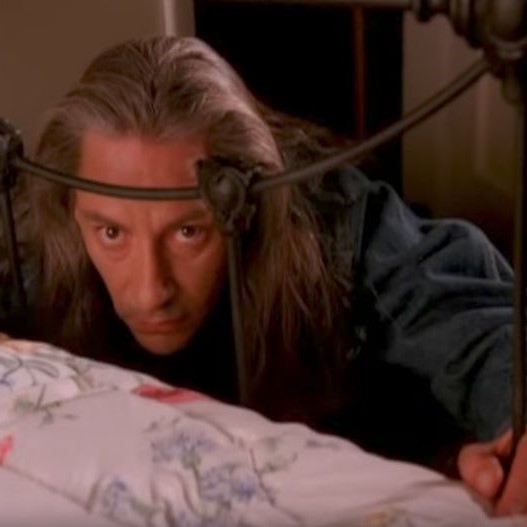
We were in a hotel room and she was in a box and she would not come out.
"He is Bob, eager for fun.
He wears a smile, everybody run."
(Twin Peaks)
Had the opportunity to attend a run-through of Scenes From a Night's Dream on Thursday night. The first act is a dream, and by that I mean it takes place inside a dream. There are so many entrances and exits, it's dizzying. But it's delightful. It's also horrifying.
My wife sent me to the basement to rub toothpaste on a couple of fuses. I went to the basement, the light was out, but I knew there was a fluorescent light on a cord down there, so I hurried down the stairs and found the light. I could just see the old fuse box, way across the room. I could see other things, too, and that scared me so I fled back up the stairs as fast as I could go.
The subject of my dreams has been a major part of my waking life, especially in the past couple of years. Is that true for others? Or is that incredibly self-indulgent? Musing on random imaginings which make sense only to me.
It was so big inside my parents’ house. Their bedroom was massive, with flocked wallpaper and Trompe-l'œil ceiling. But there was terrible mold and water damage. I offered that anyone who needed a place to stay the night might live there.
"Mama! Papa!"
(In the Night Kitchen)
In the past several years, between the death of my mother and the pandemic, these amorphous journeys have loomed large, featuring undocumentable trends which are difficult to trace.
With my brother and his wife in a crumbling old house. I was lecturing them about not setting the spider webs on fire.
During the lockdown, my subconscious was out there, in the world that I was visiting with much less frequency. For the past year or so, interiors have played a strong role in my dream space. And while they can be grandly spacious they are also worn and aged.
There was this rap act. They had a demo that they tried to re-record but it wasn’t as good so they made a video from the demo. For some reason, I held this particular act in contempt and used an app on my phone to change the lettering on the marquee to read “Comedians Rap Now.”
My parents stately home is often a location I return to. They may or may not be there, and the rooms are not actually the rooms as they were, but physical manifestations of the emotions those rooms represented. 
A large school many kids, flooding. High water. Lots of snacks. A beautiful schoolroom. So many kids.
Source: Cleveland Clinic Foundation
Returning to these neglected rooms, I lamented not having sold my parents' house when it was still in good order. I woke relieved because I had actually sold it. I once held a great sense of responsibility to keep the place, but that would not have made me happy. And so my dream actually reminded me that I had made a good decision, which is a useful thing for a dream to do.
Tooling down a street in my old neighborhood, noting homes that had been torn down we missed the turning and drove into the cemetery, which appeared from the opposite end to be a packed theater house.
The first act of Scenes From a Night's Dream tells a story where nothing is real but everything is true. James plays a menacing character (actually, he does that in both acts) and the other night he told me he'd unlocked the entire play in one line. I was shocked because he was absolutely correct, but I was unaware of it. You'll have to come see the show to figure out what that line is. 
Different rooms, different spaces. A big event. I was dressed as a mime, but I had to go around. Part of the performance included a shadow play in which a ballerina got stuck but was rescued by a fox with the voice of Prince.

Friday, February 25, 2022

The Witches (inspiration)

Adrionna Powell Lawrence
Rehearsal for "The Witches"
Titles can be challenging. Usually I turn to song lyrics. Is that a bad thing? Not that I care.

Recently, I wrote a script titled No One Wants To Work Anymore. A meme from 2021, that phrase was the inspiration for the entire piece, so it makes sense.

The working title for The Witches was The Witches, inspired by Stacy Schiff’s epic history of the Salem Witch Panic of 1692. As I was considering a proper title, I remembered that I have already written one play titled The Vampyres and thought it would be symbolic to have another play named after a monster.

I know. Witches aren’t monsters. You take my meaning.

The Vampyres is an immature work. My first full-length play, it was meant to be a metaphor for the creative arena. It now feels to me like a study in toxic masculinity – it’s not about toxic masculinity, any more than the works of David Mamet are "about" toxic masculinity. They are the thing itself.

The Vampyres took place in a goth-themed coffee house (very 90s), The Witches in a witch-themed roadside attraction. Who knows, in a quarter century I may write a work about death and dying called The Ghosts or The Zombies.

My original intention was to write a piece about tourist traps (my wife and I love tourist traps) and also about my life in non-profit theater and education. The attraction in question, the fictional Bradbury Witch Dungeon (and Museum) aspires to a status of respectability as an historic, educational institution.

Bryce Evan Lewis
Rehearsal for "The Witches"
The family had a brief stay in Salem a few years ago, and I revisited a certain witch-themed attraction with our eldest, finding it to have changed somewhat since I visited with my wife a quarter century ago. I mean, it was mostly the same, except the docent, our guide, provided a great deal more context, which made the entire experience much less cheesy. Also, no one jumped out and said “boo” at us as they had in 1996. The place felt downright respectable.

Upon returning home, I wanted to call them, to see what I could learn about a place like that, how does it operate, how big is the staff, what are their hiring practices, were the changes I saw standard, or does it depend on who is conducting the tour?

The person I spoke to on the phone was not interested in speaking to me. I left a message, no one returned my call. I sent an email, and again received no response. So in writing my play, I just made stuff up. Sometimes you have to make stuff up.

To be continued.

Sunday, February 13, 2022

The Ocean Breathes Salty (In Performance)

Hannah Woodside & Adam Harry
Writing has always been my superpower. First, I harnessed it as a tool against my enemies. I thought that was okay. I was wrong. When I learned how to use it as a force for good, things came into focus. I could tap into my mind, my heart and my soul, and I started to understand what I was meant to write about.

What is writing as a tool for good? Having an agenda, knowing what your agenda is, and that it is true. That it harms none. You put people you love onstage. You learn something.

Anything you might have to say to someone you love which might be harmful? Say those things in person. Or decide that it is not important. Know that about yourself, at least.

This was the first weekend for the 2022 NEOMFA Playwrights Festival, which featured two ten-minute plays – mine (The Ocean Breathes Salty) and one by Eric Mansfield – and a one-hour work by Gabby DiDonato.

Mine was the weird one. Mine is always the weird one. The others were clean in their narrative, mine was abstract. My wife approved but even she suggested it may be a bit underwritten. I was pleased with the results. 

Emmett Podgorski & Clare Scott
It was an experiment, I would normally have chosen to do one, single scene, instead opting for five short scenes which allowed characters to bounce off of each other in twos and threes. Perhaps more suitable for a full-length, but who knows. One of my professors commented that they liked the short scenes, these vignettes. I like them, too.

I saw the performances on Friday and Saturday night. There was a post-show talkback on Friday which, for my play focused entirely on the bunny. There’s a bunny in the play. What was the significance of the bunny? That was pretty much the entire discussion. There were also four human actors in the play who played characters with emotions and lives and things, but everyone was confused about the presence of the bunny.

I think my brother put it best when he said, “Sometimes a rabbit is just a rabbit.”

Thing is, there were several audience members who spoke to me, during intermission, after the show. They wanted to know what happened in the play, because they were unsure. I asked them what they thought happened, and each of them, somewhat hesitantly, told me what they thought had happened. And each of them were absolutely correct. They did understand the play. It just wasn't made obvious.

This week we're reading Sheila Callaghan, and I am digging the way she plays with reality. I need to decide what story I want to tell this semester, and this experience with The Ocean Breathes Salty has inspired me to move further in this direction. Playing with reality might be my new superpower. 

Many thanks to KR Jones, Adam Harry, Emmett Podgorski, Clare Scott and Hannah Woodside, who did beautiful work on my short play! 

Saturday, November 20, 2021

Process XLVI

The weather turns. The week has been exhausting and stressful. Illness among the team and I found myself playing Macbeth in Kent, as I have in days of old. But now I’m old and it is wearying. Enjoyable, but wearying.

But it feels as though we are barreling toward the end of the semester, and the holidays. And I’m excited about that, and that makes me cautious. Because looking forward to anything feels ridiculous. Anticipation? In this economy?

Speaking of the economy, this week we read Fulfillment Center by Abe Koogler. Having read several contemporary works (or tried to write one) about folks trying to make sense of life in this new millennium, this was the first to conclude on a note of what might be called hope. 

This week I turned in my final first draft of No One Wants To Work Anymore for the playwriting workshop. At the beginning of the semester, I had no idea what I would write. I cast about for inspiration, drafted ideas day by day, single page by single page. And then I wrote something -- a mystery, with structure, character, plot, humor and social significance. I can be proud of that.

Teaching at Kent Roosevelt High School

I have been casting about (occasionally) for online writing prompts without much success. Most are too specific, they are meant to inspire conflict and leave no room for flexible imagining. For example, one might read, “You’re at a buffet, and you and an attractive stranger reach for the same slice of pie at the same time. Go!”

Recently I came across the prompts at 826LA which are meant for children and young people and those have unlocked a few doors already. Yesterday I read this one:
Have you ever had a fight with your friend? How did it make you feel? How do you think it made them feel? What did you and your friend do or say to make up after?
I wrote a short story once, inspired by just such a thought, but when rewriting it as dialogue it carried me into a much different place. I resolved some time ago to cease typing up and posting short plays, but I might like to finish and share this one. It may even be a ten-minute work. 

Tuesday, September 7, 2021

The Future: September 2001

James Alexander Rankin
Photo by Cody York
You know this story, or one very similar to it.

It was my second week as an actor-teacher for Great Lakes Theater. We were in rehearsal, playing a warm-up exercise. Someone’s cellphone went off, and instead of turning it off, this someone answered it and started talking. This has always irritated me in remembering it, that that was unprofessional. Inappropriate.

I recall only now that it was his mother. If it had been my mother, I would have answered it, too.

The rest of us kept playing the game. Silly game, one meant for children. I could overhear the conversation my colleague was having. Something bad had happened, happened in New York.

I thought, I am now in the ignorance. Really, I thought that. This is my last moment of the innocent not-knowing.

It was a deep, blue Tuesday. And on that day the 21st Century truly began.

As I was composing the script about my experiences with stillbirth, the script which would eventually become I Hate This (a play without the baby) I included a scene about September 11th. It made sense to me then. The story begins in March 2001 and tells about what happened through the following twelve months. It is set in time, how could you not make mention of the most traumatic moment in modern American history?

On that day we, we actor-teachers, we first listened the radio, and then went downstairs to watch on TV in a local bar and grill, before finally drifting away. Rehearsal was over for the day. I called my wife, she was watching at the fitness center. She lived in NYC for seven years, we knew people there, we had been there less than a month earlier, and we were both still so fresh in our personal grief. Was she okay? She was fine. Disoriented, but fine. We planned to meet at home.

She had a therapist appointment that afternoon, and called to see if she was seeing anyone that day. Her doctor said, well, she had appointments after all. And didn’t it make sense, seeing as what had happened that morning, to keep them? The doctor even asked if my wife would like to invite me to join them, which was very nice, and so I did.

David Hansen
(MetroHealth Main Campus, 2005)
Trauma can trigger unrelated trauma. It felt selfish even then to make this about us, and our loss. People had died that day, thousands of people died horribly. But we were still in our recovery, and the shock of this other event was still a shock.

I tried to articulate this in my play, which I began writing in 2002. One member of our writers group thought it was a distraction from the main story, which was and is intensely personal. He said it took him out of our story to mention 9/11. The others disagreed, and I kept it in, but his sentiment was not unreasonable and it stayed with me.

I remember my first performance in the West Village in 2004, as part of the New York International Fringe Festival. I was aware of the fact that I might be reporting back to people personally affected by the tragedy what it had been like to watch it on TV. From Cleveland.

During the scene in question, titled “The Future,” I take the briefest of pauses after first mentioning the World Trade Center, a moment of silence in which one of the critics seated in the second row, literally five feet in front of me, loudly clicked their ballpoint pen to make a note. Ah-ha.

Directing the play for video this year, Chennelle asked if I would consider dropping the scene. She’d suggested a few judicious but minor cuts here and there, first when she directed my performance in 2016, and again directing James for the Playhouse Square video. Minor, but notable. She’d never suggested cutting an entire scene. I asked her to film it, and we’d see.

There’s nothing wrong with James’s delivery. In fact, it’s very good. But watching a rough cut of the video, I have decided that Chennelle is right, that the time had come for this scene to go. Because to someone who had not lived through that moment, it is distracting. There are details that tie the play to time and place, but that one is so vast. Mentioning it before was appropriate, because it was expected. Today, I agree that it is no longer necessary to include in this play. 

James Alexander Rankin performs "The Future"

Playhouse Square presents the premiere of the video adaptation of "I Hate This (A Play Without the Baby)" by David Hansen, directed by Chennelle Bryant-Harris and performed by James Alexander Rankin, in the Westfield Studio Theatre on Saturday, October 15, 2022. 

Wednesday, July 28, 2021

The Electric Hotel (book)

Pengo’s 2021 Summer Book Club

Last Christmas, my wife presented me with a copy of Dominic Smith’s historical fiction about the origins of the motion picture, The Electric Hotel. The New York Times calls this novel a “highly entertaining work about the act of creation” though by the time the word reached me, she, my wife, claimed it had been called the greatest book on the act of creation, which is to say ever, and that I found hard to believe.

As I have opined previously this summer, I do like works about the art of creation, but only when they are about other media; I like movies about painting, painting about dancing, dance about television, TV about theater, plays about writing, books about movies. But plays about theater are usually self-congratulatory and rife with inside jokes. Movies about movie-making can be awfully sentimental and hagiographic. Television programs about TV, don’t get me started.

There are exceptions, of course, and we all know what those are. But for every Sports Night there is a Studio 60 on the Sunset Strip. For every The Player there is Once Upon a Time in Hollywood (don’t get me started on Once Upon a Time in Hollywood.)

The greatest film about the art of creation is, of course, Big Night. This small, period film by Stanley Tucci and Campbell Scott film is a beautiful tribute to the immigrant American experience and all the dreams and disappointments that it engenders. But it is first and foremost an epic tale about the creation of food, what it signifies, why what we cook and how we cook it is important, never more poignantly exhibited than the single, five-minute closing shot, virtually wordless, which involves the preparation of a simple breakfast of eggs.

Stanley Tucci, Tony Shaloub
"Big Night" (1996)
The Electric Hotel
is like two books. One chronicles the very, very early days of cinema, when folks were happy to just watch short clips of cats doing tricks (yes, yes) and how in very short order unconscionable amounts of money were being spent to cobble together fantastic sights to tell stories of beautiful, horrible people. The other book is about the origins of the uses of film as documentary fact and also political propaganda.

The fact that we have not found any new uses for motion pictures in the hundred years since is actually quite demoralizing.

Each tale is presented as prelude to the narrative thread, the rediscovery of these ancient works by a young film historian in the early 1960s. This man is a cipher, it’s not his story and just as well little time is given to him. His presence is a constant reassurance that the films so elegantly described in Smith’s text will not actually be lost to fire, flood, or the natural decomposition of plastic nitrate.

But is it the greatest rumination on the act of creation ever set to paper? Actually, it may be. At least, it excellently represents the chaos of creation. So many biopics or “great man” histories create a familiar origin tale of those who were destined by the universe to become what they eventually, inevitably became. Against all odds! They rise and fall and rise again!

These fictional film makers, impresarios, side show and classical stage performers; they added their piece to the puzzle of how motion pictures work and what they could do with them. But there was no plan, no grand vision for what it would be. Lives are messy, and art is messy, it is only in hindsight that someone else decides whether any of it was worth doing.

Sunday, May 16, 2021

The Frantic Four (comic strip)

Artwork: Tom Packis
When I was a kid, I would get on a city bus, by myself, and take it to Lakewood. This was when I was ten or eleven. I’d get off on Clifton, and walk a half-mile south to get to Kovacs Comics at 16108 Detroit Ave.

I have this strange memory of a man with these bizarre growths, hanging from his face. They were like spheres of flesh, hanging from stretched tethers of skin. I found it horrifying, and only glanced at him and looked away. His face was unreal, grotesque.

Years later, in a novelty shop, I saw a rubber mask featuring the exact same, bizarre deformity, and I wonder, was that man real? Did I conflate some memories? Or was the guy on the bus wearing that mask and I couldn’t tell?

Anyway there I was, a child, on the RTA, on my own. Freedom! I can’t imagine my kids wanting to do that. 

I had a flyer from Mister Fantasy’s (15015 Detroit) and it was just an ad for the store. All the comics shops did that, printed up flyers to put into each bag of comics you bought. 

Artwork: Philip L. Fried
This flyer featured an original comic. “Mr. Fantasy” was direct addressing the reader, talking about how the store was closing, and that this was the last comic. Mr. Fantasy was a big bearded guy, the stereotypical image of a guy who owned a comic book store.

Thing was, though the comic was cheeky and cheery, in the last panel the character had shot himself. It was just a blood-spattered wall.

In 1981 or 1982, I was introduced to North Starr Comics. Originally it was a mail order concern, operated out of this guy’s basement in Fairview Park. But he had fixed up his basement the way you would a store, and my friend Tom brought me there. It was so cool, like a comic book speakeasy. If you knew the password, you could browse and buy and hang out and shoot the shit.

By 1983 he’d rented a storefront on Lorain Avenue. A proper store, open for business. And there was a regular cast of characters who would hang out there and antagonize each other. Some of us would spend hours there, reading books, watching comings and goings. If you have been paying attention, North Starr Comics was the inspiration for The Negative Zone, my recent comic book project.

"Ghoul" reference
Dave, the proprietor, also had fliers. They were usually cheesecake pin-ups drawn by this guy named Phil. And I thought, wouldn’t it be cool if we made a superhero parody featuring characters based on all the guys who hung out at the store?

Looking back, this turned out to be my first public foray into script writing. I wasn’t much of an artist then (am I now?) but Tom was, and so we created The Frantic Four which was full of inside jokes and references. 

It’s not for the ages, suffice to say I didn’t know what to write about, things just happened. Mostly it was a goof, inspired by Marvel Comics’ own self-parodies like Not Brand Echh, or the kind of riffing humor you would find in Cracked. 

One lesson I am glad I learned early was about unappreciated mockery. We were all in on the joke, but there was one guy who had been the butt of our jokes for some time, and I made him the villain of the story. In his first appearance he was an overweight, diet pop swilling creep who had a cadre of robot servants dressed like high school cheerleaders. We used his actual first name, and the drawing did look like him.

After that "issue" of the comic was produced and distributed, I received a very terse but measured phone call from him (he was in his mid-20s at the time, I was fourteen) explaining to me exactly what the meaning of the legal term "libel" was and recommending I put more thought into my work.

He wasn't wrong. He wasn't wrong at all. It freaked me out. So I had his character unceremoniously murdered by Dr. Doom and never mentioned him by name again.

It is remarkable to me, however, that for a couple years I was producing scripts, that another artist was turning them into pages, and that people actually received them to read (or throw away) in their monthly bag of comics.

My interest in the project waned at the same time my interest in superhero “floppy” comics did. By the time I was a junior in high school I was so engaged in other things, and that was around the time they ret-conned the Jean Grey/Phoenix Saga (if you know, you know) and I was moving on. North Starr closed shop while I was at college, which is as good a metaphor as anything else.

Creating The Negative Zone comic, taking the class, was  quite restorative. I felt like I had the opportunity to rewrite some history I had closed off in my memory, and to remember how enjoyable that period of my life was. It was so easy to dismiss the writing I did for this project as childish and silly. But that's what it was meant to be. And the really important thing to keep in mind is that we did it. 

Many thanks to "Frantic Four" co-creator Tom Packis for his amazing artwork!

North Starr Comics

Thursday, December 31, 2020

DDT-V (revisited)

The DDT-V All-Stars
(Can you spot Doug Dieken?)

Fred kept us honest. Any expression of ego was roundly mocked. We were kids, making a cheap comedy show. 

DDT-V (“Lethal Television”) was created by high school and college students, and broadcast intermittently on our community access channel from 1983 to 1986. It was a collection of sketches, fake news shows, and a lot of commercial parodies.


Fred was the driving force, no matter what any of the rest of us thought. He wrote most of the sketches, did so many of the voice-overs, even appeared in front of the camera a couple times.

After he died from a heart attack two years ago (on my fiftieth birthday, as it happened, thanks, Fred) I came into possession of the archive of our work.

Some of it holds up surprisingly well. And even where the humor is a bit obtuse, at least it has style. We used every square foot of the studio building, went all over Bay Village, hosted an entire episode from a booth in the North Olmsted Denny’s, did a location shot outside Cleveland Municipal Stadium downtown. 


When we held a charity baseball game against the high school faculty to raise funds for the Cystic Fibrosis Foundation, our team had a ringer in the recently retired Cleveland Browns offensive tackle Doug Dieken.

Cartoon, The Bay Window
March, 1986
Watching these episodes I am able to track my development from a self-conscious freshman to a cocksure senior, which is a blessing and a curse. The one big regret I have, looking back, is that I never wrote anything for the show. That’s not true, I wrote one sketch that was recorded and aired. It’s not great.

I was intimidated. I didn’t know how it was done. Most significantly, I had nothing, at last, to say. I still believe that, at that age, I actually did not have anything of value to say. Or I did not know if I did. Most of what I did write and put out into the world, in the form of op-eds for the weekly high school paper, took the form of snark and grievance.

My editorial cartoons weren’t bad, however. They improved by the year. I suppose there is a lesson in that, that if I had tried to write, at that time, I would eventually come up with something worth being produced.

I guess that is exactly what I have been doing ever since. 

Wishing you creativity and happiness in 2021!


Saturday, November 21, 2020

Process X

In the room.
This week I ran out of writing prompts.

On a whim last fall I looked up “writing prompts” and found 365 Creative Writing Prompts at ThinkWritten.com. They weren’t super involved, many of them focusing on one or two words. “Dancing” or “First Kiss”.

I found these to be much more liberating and inspiring. Many prompt books or online lists are too detailed. “Write about a time you disappointed someone.” Well, that makes it specifically about me, doesn’t it? I mean, it doesn’t have to be, but that’s where the mind first goes.

“Write about your virtual plans for the Thanksgiving holiday.” I mean, that’s a journal entry. I guess it’s aspirational, but not really.

Maybe I should start again from the beginning though I would like to try something new. So many of these prompts resulted in short plays, and many of those were turned into videos last Spring, at the beginning of the pandemic. Looking them over, I think of those. Gotta try something new.

This past week, James and I visited labor and delivery at University Hospitals. Next year is the twentieth anniversary of the events which inspired I Hate This (a play without the baby) and plans are afoot to bring that show to a wider audience.

James has never experienced childbirth, not from the outside, anyway, so this was a wonderful opportunity to know the space and to work with the text.

Okay, this is a big weekend. I have two weeks to finish two big assignments, fortunately there are no assignments for either of those specific classes this holiday week. And my full-length (which is not, I feel, full-length, but) is in good shape to be read the following week.

In fact, there were a few notes my advisor gave me that I was able to incorporate. "Breadcrumbs." Moments to keep the audience on their toes, even as the protagonists go on about 1980s teen movies, life ... everything, really.

Thursday, February 27, 2020

The Witches: First Reading

Upstairs at Parnell's

What’s next? As I described previously in my post on procrastination, I have been managing my deadlines not by thinking of them all at once, but only by what is next. I would not recommend this as a way to live your life in general, but I found it was the only way I could manage for the present. Only what is right in front of me. I have the skill to manage. And the meds.

And so it was, I completed the first draft of The Witches. Which is to say, I reached the end. The play is not complete, but then why should it be? The Test Flight series “offers artists the opportunity to self-produce works-in-progress.” (CPT website.) It will remain in progress until these performances close on April 11, and beyond.

Director Chennelle, most of the acting company and a few friends met at Parnell’s last week to hear it all out loud, from beginning to end. It read at an hour ten, there’s bits still missing, I will have a longer draft available when rehearsals begin next week.

So, the witches. This is a kitchen sink play, sister to The Vampyres (no, that wasn’t intentional) in that I saw a scene, I felt a mood, and I thought I had something to say. But I didn’t know what was going to happen. Unlike, for example, The Bully of Baker Street, where I had a clear agenda, and plotted a mystery with a beginning middle and end before I started to write, here I had a place, I had characters, and they told me where to go.

And yet, there’s an awful lot going on here, as the readers and listeners made evident. Because it’s not just about witches, it’s about ghosts. It’s not just about women, it’s about generations of women.

Women who should respect each other, but don’t. Those who believe "the young and brash are destroying the work." (Craig's words.) Those who see themselves as functionaries in the grand schemes of their elders. And those who keep their heads down and just keep working.

Then there’s New England, and Salem, and the old beliefs. Chennelle observed something I have always noticed about places like Salem, or New Orleans. They are like Europe, in that they are loud. Heather called it an energy. They have a loud energy. Perhaps that is only to the descendants of those who came or were brought across the ocean to be here. The weight, the loud energy of our history, which is not evident in the newer buildings and pavement of a Cleveland, but in the wood, the soil, the trees of the colonial, coastal towns and cities.

Our company wants rules. What calls the spirits, what makes them go away? Old Hamlet wandered the ramparts seeking attention, but he was also easily insulted. On the Dark Side of Twilight was all about how the rules for vampires have shifted over time. We also need to understand what those are.

Finally, the characters themselves. The four from 2020, the four (five, actually) from 1692. They each have their own history, biographies which I have created but not yet shared. Because I want to know it makes sense before I tell them why I think it makes sense. We will work together to create a common understanding of their past.


There's more, a lot more. And it's a comedy, that's also important. I want it to be stirring and chilling and funny. During our discussion someone mentioned a line from Poltergeist and I thought, well, I know exactly where that goes.

Right now I am feeling excited and grateful, grateful to work day after day with so many talented, loving people. A long, long time ago, when we were youngish, I was sitting with a playwright friend in the Arabica on Coventry, musing pretentiously about the Algonquin Round Table, and how I wished that one day we would be famous and spend our days just writing and our nights sitting around a pub or restaurant getting tight and tossing off bon mots, night after night after night.

Yes, well. I'm not famous and I neither write for a living nor do I spend every evening drinking and posing about. But there are these moments, and there quite a few of them, when we share in semi-public spaces, chatting and drinking, and reading and doing the work, and I think I got what I always wanted after all.

Parnell's Irish Pub Playhouse Square is located at 1415 Euclid Avenue in Cleveland.