Showing posts with label Authorship Question. Show all posts

Thursday, March 27, 2025

Hamnet (book)

“He is himself, not a play.”
- Hamnet by Maggie O’Farrell (2020)
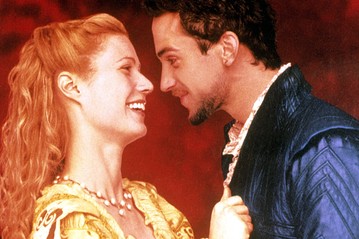
Last week we saw the Broadway tour of & Juliet at the Connor Palace. As the show began, and the character of William Shakespeare took the stage, I had the sinking feeling I was about to be subjected to yet another foolish depiction of the Bard – like the one in Shakespeare In Love, Dark Lady of the Sonnets or – God, no – Something’s Rotten.

I mean, I knew what I was getting into, a fantasy “What if” Juliet hadn’t died, laced with Max Martin’s greatest hits. I just didn’t know HE was going to be a part of it. Because he’s not a character in his Romeo & Juliet.

As it happened, I really enjoyed & Juliet (so did my 96 year old aunt) and so much more than Something’s Rotten, which I really do not like. The former is a celebration of queer empowerment, the latter a middling 21st century meta-musical that still manages to be as hokey and immersed in the patriarchy as The Producers, which it so hard is trying to be,

But why, I asked, even as I was bopping along to "Backstreet’s Back" and "Oops …", why do we do this, and by we I am absolutely including me, why do we, why are we compelled to participate in the Shakespeare Industrial Complex (SIC) not content to merely overproduce his work (which is itself a problem and basis for another discussion) but to contribute to the lore, to expand upon the characters, the plots – and the man himself.

Corey Mach as William Shakespeare
"& Juliet" Broadway Tour (2025)
Why, in short, all the Shakespeare fan-fiction? Because, to be sure, it does not often rise above that.

Since I first picked up and then put down the novel Hamnet by Maggie O’Farrell, over three years ago, I have read two other historical fictions about Tudor-Stewart era playhouses, Jinny Webber’s Bedtrick and Mat Osman’s The Ghost Theatre. But this one, Hamnet, kept reemerging in conversation. “Have you read ..?” All the recommendations, all the references, the book itself, staring at me from a shelf, a table, the floor, a pile of other books.

I finally read it: difficult to get into, then for the past week impossible to put down, only to conclude poorly, as this achingly well-told story of a mother’s grief was in the end contrived merely to connect the lost boy to the famous play. I felt cheated. I got angry. I still am.

This novel is inspired by the life and untimely death of Hamnet Shakespeare, the playwright’s only son, fraternal twin to Judith, younger sibling to Susanna.

Stephen Greenblatt
What I do like about this book is that it focuses on Agnes (one of two possible first names for Shakespeare’s spouse) who is in this telling a fascinating, magical person, strong and confident, gifted with second sight, a deep understanding of herbal medicine, even a falconer!

Where there are gaps in the historical record (or perhaps I should say gap, one big, fact-free gap) it is Agnes who acts, who has agency in spite of familial oppression and public scrutiny. It is she who decides that if they are to be together, she must become pregnant. Later, to realize his independence from his family – and from Stratford, where she can see he is unhappy – it is she who convinces him to follow his bliss to London.

There is even the suggestion that she wanted the second-best bed left to her in his will, because, after all, it was her bed! The one available fact that folks have used to divine the unhappiness of their union, in this telling he was merely serving her desire, and put it in writing.

 Alexander Skarsgård as Amleth
"The Northman" (2022)
A film directed by Robert Eggers
And she does, and they do, because he wrote a play called Hamlet.

Then, the plague. She saves (or believes she saved) Judith, but loses the boy. And she suffers, so deeply. It was unbearable. I put the book down. I picked it up again. Because I was made to care about this woman, and I wanted to see her make her way through her grief, and to reunite with her estranged husband, the one who made a successful living in a playhouse, far from home.

Time and again, folks have strained to tie the name of Shakespeare’s son to that of his most famous play. Stephen Greenblatt made note – and O’Farrell echoes in her prescript – in the article, “The Death of Hamnet and the Making of Hamlet,” (link) that the names Hamnet and Hamlet were interchangeable in the 1500s, which is far too easy an explanation.

My wife’s name is Toni. Tori is also a name and only one letter different from hers but if I called her “Tori” she would say, “that’s not my name.” And Greenblatt has been criticized for just making shit up.

Hamlet and Hamnet are similar names. But apart from that uninteresting detail, there is nothing to suggest Hamnet's death in any way inspired the composition of Hamlet.

Because the play Hamlet has nothing to do with a dead child.

Because there are no twins in Hamlet. And though he did write a few plays that did feature twin, none are named Hamnet, nor Judith (there are no Shakespearean characters named Judith at all, nor for that matter, Susanna). And twins used for the purpose of comic mistaken identity was and remains a common trope.

Ed Frascino
The New Yorker (1991)
Because Shakespeare didn’t choose to name his main character Hamlet for this particular revenge tragedy; it is based on an ancient myth about a Norseman named “Amleth” – which would be a terrible name to have to say upon an English stage, you couldn't finish a sentence.
“This gentle and unforced accord of Amleth thith thmiling to my heart.”

“Lord Amleth ith a printh out of thy thtar.”

“Come hither, my dear Amleth, shit by me.”
And tho on. And because Shakespeare himself did not even choose to change the name Amleth to Hamlet, someone else did that, writing a different revenge tragedy that included a protagonist named Hamlet in 1585, which was a few years before Shakespeare even started writing plays, and fifteen years before he wrote Hamlet.

Here’s the thing. The reason many have sought evidence that someone other than Shakespeare wrote Shakespeare is because there remains scant evidence of who the man was, so they try to draw connections from the text to his contemporaries, those about whom much is known. And while these “Adventures in Authorship” may be harmful, so is drawing bogus connections between the text and what very little we do know about the man himself.

"Hamnet" (2025)
Directed by Chloé Zhao
Speculation, for the purpose of fiction, is all well and good, but we must cleave to the facts as we know them, because these speculations, very often stated as fact, become accepted as fact. The Queen never asked for a play about Falstaff in love. Shakespeare never said “William the Conqueror came before Richard the Third!”

And Hamlet was not written for Hamnet, which is unfortunately the climax of O’Farrell’s book. And her depiction of Agnes witnessing a performance is perplexing, because it is in witnessing the scene between Hamlet and the ghost of his father (performed, as has been often suggested, by Shakespeare himself) that she comes to understand her husband’s grief – but it’s not there, not on the page, not on the stage. She describes a young boy playing Hamlet, which is absurd on a couple levels – Hamlet isn’t a boy, he was probably played by Burbage, how the hell could a boy player carry the rest of the show, etc. etc.

Why does it matter, you may ask? Why does it make me, as I have said, angry? Because. I didn’t want to read it. Then I was glad I was reading it. Now I am unhappy that I read it.

Greyson Heyl and Nic Scott Hermick
"Twelfth Night (Or What You Will)"
Great Lakes Theater (2025)
Photo by Roger Mastroianni
Agnes was beside herself to learn that her husband had written a play using their son’s name (even if it’s not really his name) and made the journey, for the first time in her life, out of Stratford and all the way to London. London! Can you imagine? To see a play! She’d never seen a play! Most people those days never had! (Actually, they had, but whatever.)

And what would she have actually seen? A fully grown male actor, upon a stage before a rowdy, packed audience, playing a Danish prince, who is by turns mopey, arrogant, somewhat creepy, pretentious, passive-aggressive, misogynist, and murderous, who is ultimately killed in a duel, the stage littered with the bodies of many other characters whose deaths this Hamlet character was directly responsible for.

Honestly? He should have invited her to see Twelfth Night. Agnes may have found that one much more relevant and affecting. It has much more to say about grief and acceptance, and it has twins in it.

Monday, April 27, 2020

Play a Day: Wonder of Our Stage

Monica Cross
For Monday, I read Wonder of Our Stage by Monica Cross and posted at New Play Exchange.

I am currently reading The Mirror and The Light, Hilary Mantel's third book in her trilogy of the life and work of Thomas Cromwell. If the first two novels taught us anything, it was dangerous the marry Henry VIII. This third book, which I am only partway through, teaches us how dangerous it became to marry anyone even related to Henry VIII.

Last spring I first read Wonder of Our Stage during the run of King Lear at Beck Center. Cross has since created a final revision, and so I wanted to read it again.

Mantel, in her latest work, echoes the premise of Cross's play, which is how fraught it was to be a female heir to the throne or monarch herself when it comes to matrimony. To marry a male foreigner of any rank is to be subordinate to an entire nation, to marry an Englishman is to be subordinate to a subject. Because women are subordinate, and even the Queen of England couldn't change that.

Wonder of Our Stage takes the world of Harold Bloom quite literally, that Shakespearpeare "invented the human," and this play is a deeply pleasurable contemplation on the nature of what it is to be human. The playwright here also playfully tweaks the myths surrounding Shakespeare and the suggestion that did not write his own work.

In the past I have made comment on fictional plays about Shakespeare, scripts in which he is present and those in which he is not. In any of these cases the cardinal sin is that a member of the audience must have brushed up their Shakespeare in order to appreciate the many inside jokes. This is not the case with Cross's work, which is enjoyable entriely on its own. 

Elements of many of the Bard’s work, entwined with homages to Frankenstein, Pinocchio, and all stories of a child or creation in conflict with their parent or creator. Elegiac and inspiring, this script is a must-read.

Who should I read tomorrow?

Monday, August 20, 2018

Shakespeare (Not) On Stage

Roderick Cardwell as Richard Burbage
in "The Great Globe Itself" (2015)
Photo by Ryan Labay
Several years ago I wrote a play about the Globe Theatre, one which described three different buildings which have used that name, from three different eras in two different cities, each which was built to feature the works of William Shakespeare. My play was titled The Great Globe Itself, and toured northeast Ohio, in libraries and schools and theaters.

Shakespeare does not appear.

Over twenty years ago, my wife and I saw The Herbal Bed by Peter Whelan, a fiction inspired by the once long-forgotten-to-history accusation of “lechery” against Susanna (Shakespeare) Hall, eldest daughter of Stratford merchant and landowner William Shakespeare. The case was found in favor of the defendant, and the play begins as a bodice-ripper which soon evolves into the Puritanic courtroom drama not unlike The Crucible in its torturous circumlocutions.

Shakespeare does not appear.

This summer I read Lauren Gunderson’s The Book of Will, a fanciful imagining of the hands the collected, collated, edited and published the First Folio. inarguably the most significant publication in English literature. (see my blog post on The Book of William)

Burbage dies (almost three years after Shakespeare of Stratford) and it suddenly occurs to their surviving contemporaries that so much of what gave the work its power was locked inside the heads of those who spoke his lines. If not written down, they would be lost to history. The scramble to create a proper volume of the complete works -- in fact, determining what a complete works should consist of -- is as delightful to read as I am sure it is astonishing to witness.

Shakespeare, who as aforementioned was already dead, does not appear.

Finally, my brother sent me a play script from England for my birthday; I Am Shakespeare. Written by Mark Rylance, Oscar and Tony Award-winning actor and former Artistic Director of Shakespeare’s Globe, Rylance is also a notable Shakespeare-denier, an Anti-Stratfordian, one who does not believe the “Man From Stratford” (as they like to call him) wrote the works attributed to him.

And yet, Shakespeare does appear in I Am Shakespeare.

At least, a version of him does. Rylance’s play falls into that category of “debate” plays that Shaw was so fond of creating (see my blog post, Shakespeare On Stage) though is Shaw’s case the argument was on the works’ merit, not its authorship. Shaw was openly scornful of those who proposed or defended such theories.

In Rylance’s play, William Shakespeare, as a character, arrives in the present day at the garage of Frank Charlton, a man obsessed with the “Authorship Question” and who hosts an online chat program that would appear to have a small, devoted following. The program has also ruined his marriage.

(Rylance uses Charlton as his stand-in, and wrote the role for himself to perform. He acknowledges, it would seem, that many who share his unorthodox views are not successful and lauded actors and directors of stage and screen, but more likely to be tin-foil hat wearing losers.)

Shakespeare, the character, has arrived from the past or elsewhere to debate the legitimacy of his achievement. He is soon followed by Francis Bacon, Edward de Vere, and Mary Sidney, all to make the same claim. Attention is also given to Marlowe, who is obviously too cool to make an appearance.

It’s all a fun exercise, and very witty, though much of the humor stems from a wide knowledge of and deep appreciation for the works of Shakespeare. You already have to be in on the joke.

When writing The Great Globe Itself I had several agendas. The play was meant to illuminate the significance of the Globe Theatre (three Globes, as I said) as a unique acting space, one specifically suited to (most of) the works of Shakespeare.

I also wanted to tell the story of the theater Shakespeare’s made legendary in such a way that anyone without any knowledge of his life or work, could appreciate and enjoy it.

Ultimately, and here’s the kicker, I wanted to see if I could get away with writing a play about Shakespeare that also suggests the "Man From Stratford" didn’t write his own works -- but that no one would notice.

You didn't notice, did you? It was probably the impenetrable accents. My mistake.

Read "The Great Globe Itself" at New Play Exchange.

Friday, April 6, 2018

Play a Day: Falstaff Riseth

Rachael Carnes
For Friday I read Falstaff Riseth, by Rachael Carnes, and available at New Play Exchange.

My daughter a high school freshman, is currently in rehearsal for a performance of Michael Frayn's backstage farce, Noises Off. It opens next weekend, I am anticipating a good time, though I am understandably anxious to witness my first-living-born child in her first full-length play, one of great physical mayhem, English wit, and above all ...

Uh, timing.

Carnes's tale is one of epic absurdity, a relentless and raucous send-up of Elizabethan and high school drama, and above all a tribute to the thankless theater parent, without whom the show would not go on (but don't tell the senior lead that.)

The pop culture references come at you fast and furious, hip-deep with turns of phrase both classic and current, as a troupe of teens unintentionally strive to produce several productions at once. It's smart, silly, and even subversive, as the playwright has created a Shakespearean showcase where the Bard himself is entirely absent and someone else has written his plays.

Hmn. Perhaps I might recommend another work which poses the Authorship Question, The Great Globe Itself ..?

Saturday, November 22, 2014

How Shakespeare Spent the Day

"So much for Bardolatry!" - G.B. Shaw
If I were to start this post by stating, Look ... I'm not Anti-Stratfordian ... it sounds like when David Cross once began a stand-up routine lamenting, Look ... I don't hate children ...

But I do not like the term Anti-Stratfordian for the same reason I do not like the word Atheist. That's your word to describe me, and you cannot accurately nor fairly define a sentient being by what it does not believe. You wouldn't call someone who is Jewish Anti-Christian so you should not call someone who has no spiritual belief a non-believer. It's like calling someone who doesn't believe in vampires as being anti-vampire. 

What I don't believe doesn't concern me. It certainly shouldn't define me.

I believe Shakespeare wrote his plays, but that also does not make me Pro-Stratfordian. I am agnostic on the subject of William Shakespeare, the man. There have been so many lies - pretty lies, but outright falsehoods, nonetheless - that it is impossible to read any historical account of him without sighing.

I do not know how I acquired a copy of Ivor Brown's How Shakespeare Spent the Day (1963) but it has been on my shelf for some time. It has taken about six months to read it, on and off, because I got bogged down at the end. It was a great resource material for The Globe because it describes in detail how they ran a theater, they meaning Burbage and Henslowe and yes, Shakespeare. The real nuts and bolts, or more accurately, spindles and pegs, that held the work of theater together.

But even as Brown strives for accuracy, even he cannot help himself but speculates at length about the final year, spending a great deal of time lauding (his idea of) Shakespeare, a retired playwright who humbles himself, making repeated (if undocumented) visits to London in his final years, to improve upon the works of lesser poets like Fletcher and Middleton, adding his hand to elevate works like Pericles or Henry VIII or Timon of Athens.

Does it not make more sense that these were first unfinished works by WS, which had been abandoned for one reason or another (perhaps because they suck) only to be taken up and filled out by others for the purpose of production by a company that needed new works to maintain relevance?

Durr?

Tuesday, March 25, 2014

Shakespeare's Globe


If there is one overriding theme in Barry Day’s This Wooden ‘O’, one which is made early and repeated ad nauseum, it is that not only did it take an American to build a fully-functioning Elizabethan Globe theater on old Bankside, but that only an American wanted to.

It is true that other replica “Globes” already existed prior to Shakespeare’s Globe, all over the world, even as far away as Japan, but to put one right there, in that place, was anathema to post-war British thinking. Valuable river-side property was to be used for offices, factories or public housing. End stop.

Besides, as described by the author, and easily understood if you think about it, it was a dumb idea and one which never should have worked. The first time I visited Southwark was in 1990, as a student.

A troop of us were taking a whirlwind, seven-day tour of London and Stratford. We took a walking tour of Surrey at an important period of transition in the project. The place looked a great deal as it did for Sam Wanamaker when he first skulked bankside and found the legendary, blackened plaque-on-the-side-of-a-brewery, that which was the sole indication that the playhouse for which Shakespeare wrote his plays had, at one time been … around here ... somewhere.


We saw the exact same plaque. But we also saw the construction area where they had recently discovered the remains of the Globe’s main competitor (for three years, anyway) Henslowe’s Rose Theatre.

Tearing down one factory in order to construct a new office block, they had expected to find evidence of the The Rose, but not with its foundations so well-preserved. The decision was yet to be made, in December 1990, as to what the fate of The Rose would be.

Meanwhile, the Globe was as yet a great muddy pit. We stared into the hole, and it stared back. Perhaps Wanamaker, who had not yet received the diagnoses of prostate cancer from which he would die in less than three years, stared at us through the windows of the nearby Shakespeare's Globe Trust, but that’s ridiculous.

The question, even then, as recounted by our tour guide, was why build this theater? They have so many great commercial theaters in the West End, new drama created for the Royal Court among so many others, and the National Theatre for the classics. What on earth would a replica Elizabethan theater provide? What if the work is just, you know, Shakespeare? You can get that absolutely anywhere in the world.


My next visit was on June 12, 1997 with my (then) girlfriend Toni. What we did not realize was that ours was the final tour through the completed Shakespeare’s Globe on the afternoon of the Royal Grand Opening. Seriously.

They had had a workshop season in the space the summer of 1995, and another in 1996. For two summers artistic director Mark Rylance and his company had been working the space, when the stage was still plywood, and the pit for the groundlings unfinished, testing the space for best use. How far apart should the posts supporting the stage be, how far from the edge of the stage? Are the doors to the tiring house working? There was time to correct these things, and best to do it prior to the office commencement of this new theater.


We received our tour, it all looked really good, but I never got to see a show there that summer. We were scheduled to leave in another two days and all the opening weekend performances were sold. After our tour we had tea in the adjacent restaurant, and as we relaxed the place began to fill with very important people in tuxedos and dresses.

Jesus, is that Michael Maloney? I stared at him for a moment as he talked to someone and he did a double-take at me, staring, and I looked away. Yeah, that was Michael Maloney. Later I saw him head into the loo and thought of cornering him to apologize but then I thought, wow, right, that would make the world such a better place, and didn’t do that.

If we had stayed any longer we would have been chased out, the Queen was coming. Seriously.


Visiting the theater, as built, made me want to experience a show there in a way that it had not when it was merely a theory or a dream. That opportunity did not come until 2001, and even then it was to see one of the few non-period productions from Rylance’s first few years, the much-maligned fancy dress party Macbeth.

This was actually an excellently performed production, featuring Eve Best as the best Lady M. I have ever seen. It was a thoughtful, cerebral production, performed entirely in tuxedoes, except for Ms. Best.
“The real horror is that this production has been allowed to reach the public in this state.The real horror is that this production has been allowed to reach the public in this state.” - The Guardian
The script was cut in a truly magnificent way, and did, in fact, highlight the special advantages of the Globe stage. One example I love to give when working with the residency actors, is how Act IV was collapsed into one scene, cutting back and forth between the Weird Sisters' apparitions, the murder of Macduff's family, and the scene between Malcolm and Macdfuff where he learns of their fate.

All three scenes climax, one after the other, making what would otherwise seem drawn out and obvious into a highly immediate event.

 There is a story here. I can't remember what it is.

My brother served as a steward at Shakespeare’s Globe for a time, what we might call a “Red Coat”. As such, he was able to get us into one of the less-offered Heaven and Hell tours of the Globe when we returned in 2006. As might be guessed, the “heavens” is the house above the stage, and Hell below. We also got to experience everything inbetween, including standing on the stage, which was a new, exciting experience.


By this time, Rylance had stepped down from his directorship, leaving it in the hands of the more traditional Dominic Dromgoole. Rylance raised a few eyebrows when he announced he was uncertain as to whether the “Stratford Man’ had in fact written the plays, Dromgoole stomped those eyebrows right down again, a committed Stratford champion.


Kelly and I attended The Merchant of Venice on 2007. You can read my thoughts here. In brief it was well-done, enjoyable … except I was troubled by the amount of “set” which had been added, including a platform set into the groundlings area, accessible from a short bridge, evocative of the canals of Venice. There was a great deal of set dressing, around the columns, the front of the tiring house, which I found distracting and not very pleasant to look at.

My brother has described to me the truly remarkable works presented at the Globe in its brief history, I am sorry not to have ever seen Rylance perform there, or any of the works he has directed - not even in New York, where he recently remounted his all-male productions of Twelfth Night, the hallmark of his career at the Globe.

Regardless, even with the mere two productions I have seen performed there, it was evident the unique relationship Shakespeare's words have with his stage, illuminating them in a manner which is challenging on a proscenium stage, and producing them with a greater accessibility to and relationship with the audience.

Tuesday, March 4, 2014

Players (book)


The Great Lakes Theater outreach tour Seven Ages closes tomorrow at the Quirk Cultural Center in Cuyahoga Falls. Thank you for playing.

The ride has been eventful, not of the offstage-antic variety, its just been exciting feeling the show grow and solidify after what was, to me, a shaky start. Finding the throughline to a collaborative show like this one - as an actor - was most challenging. We were ready for opening, but as my confidence has grown, so too, the work. That's acting, I guess.

A week ago Monday we performed at Workshop Players in Amherst I totally love this site, there are often dozens of high school students there from Amherst Steele High School, but it is a much different experience than performing for students who have been called to the auditorium for an assembly. This is a night out! They dress up, they've put on their grown-up faces.

These kids are the theater crowd, too, so they are in their element, and impressed by good work. The post-show discussion is always very enjoyable.

After the show last week, one girl hung back as we were striking to ask, "What is your writing process?" What a question! Real writers have an answer for that, but I never do. But maybe I do, maybe now. Because I have been playing with a process which pleases me.

This is what doesn't work -- setting aside several hours, once a week. Or once a month. Or once never. The pressure to create something significant in say, an hour or two. I can't do that. The very idea of having to produce something in that time, that expanse of lonely time, that comes so rarely, it's pointless.

Writing a little, every morning, longhand. Every single morning, longhand, a little bit. Those are the single steps which make up the proverbial journey. And that is my process.

Also, when I am unhappy with a word, I put parentheses around it, and in doing so give myself permission to move on. I will come back to that word and change it later. You have to go forward to go back. Better press on.

Just finished re-reading Bertram Field's Players, a book on the authorship question which was not nearly as enjoyable the second time through. I guess that's because I knew how it was going to end. Seriously, however. It was for research, some ideas I wanted freshly rolling around my head.

In a nutshell, it makes as much sense to say "William Shaksper of Stratford" wrote the works of Shakespeare as much as any other candidate, which is to say not much. We don't know who wrote them, which is not the same thing as saying he didn't write them, but doubt in and of itself is offensive to a lot of people. In that way, Shakespeare is a lot like Jesus.

I digress.

What makes Fields' work unique is the theory of collaboration, that if it does not seem likely that the works of Shakespeare were created by any one person, perhaps it was written by more than one person. Stratfordian purists had to give way to this argument a long time ago, it is accepted for example that John Fletcher wrote a great deal of Henry VIII.

Why do we have to assume then that Shaksper wrote most of what is attributed to him with minor additions from others, and not the other way around? If the works were largely created by one who had no reason to be public, and edited and produced by Shaksper, doesn't it make sense they were one day printed in a large booking bearing something like (though not exactly like) his own name and likeness?

Whatever. He wrote the work, he didn't write the work, what I believe for sure is that Shakespeare never for a moment thought his writing would last for centuries (grandiose allusions to 'immortality' in the Sonnets notwithstanding) and that the process of creating scripts for the purpose of producing performances was the primary reason for their having been created in the first place.

And as any modern playwright worth working with understands, theater is collaborating, writing is rewriting, we're all in this together or it simply doesn't happen. Doesn't matter if you're the Earl of Oxford, if you are an uncompromising dilettante, no one will want to work with you.

Wednesday, May 16, 2012

Anonymous (2011)

Vanessa Redgrave and Rhys Ifans in Roland Emmerich's "Anonymous"

"A vulgar prank on the English literary tradition, a travesty of British history and a brutal insult to the human imagination." - A.O. Scott, NY Times

"It’s that garbage again. Shakespeare ... a mere front for the brilliant Edward de Vere." - David Denby, The New Yorker

Abraham Lincoln, Vampire Killer?
AWESOME!!!

Someone else wrote the works of William Shakespeare?
FUCK YOU AND DIE!!!

Telling cute, made-up stories about Shakespeare is very lucrative. Tom Stoppard's rom-com Shakespeare In Love (1998) has as many grains of veracity as does Stephen Greenblatt's blockbuster fictional-historical Will In The World (2004) in which the author presumes to guess where the Bard was or may have been -- and what he thought -- throughout the period in which his plays were originally produced. But Roland Emmerich is an asshole.

Slate.com pretends not to rip the film for its premise, for being "not dumb enough." It is "portentous and didactic" where it should be "playful and clever."  You know, like Shakespeare In Love. You can always criticize something for being something other than what you want it to be, I suppose. However, to call it portentous is to miss, willfully or otherwise (see what I did there) that what may be seen as sincerely overdone is, in fact, the epitome of satire -- that kind in which the satirist never winks.


History Play; the lives and afterlife of Christopher Marlowe by Rodney Bolt is another such satire which does not let you in on the joke until the very end ... unless you are paying attention or exceedingly clever, like me. Presented as a sincere, well-researched and entirely accurate account of the life of Christopher Marlowe, you might even believe some of its claims ... unless you know one of the main sources, the library of one 'Julius Marx' is probably entirely bogus. Julius was the birth-name of Groucho Marx.

However, Bolt lets everyone in at the end, where he admits his prank with this final thought -- what we know about William Shakespeare of Stratford is very little, and with what we do know, anyone can make up any story they choose.

One thing I really enjoyed were all the little details in the Earl’s study, there for those of us who know a thing or two about the Bard. He keeps a falcon, and dessicated lizards (like some apothocary.) Oxford was, of course, an accomplished swordsman, unlike the actor William Shaksper -- one who can read, but not “form his letters” -- a drink-loving whoremonger.
The argument that only someone with a breadth of knowledge, afforded only to those with the leisure and wealth to support such pursuits, is branded as elitist to Stratfordians (the term doubters use for those who think Shakespeare is actually Shakespeare.) Anyone with drive and ambition can educate themselves, anyone may be born a genius, and those who are may self-educate themselves, and succeed.
It’s also an argument conservatives use to gut social programs and the public school system, but I digress.

Brian & Tim get busy on my work.

Great Lakes has commissioned me to write next year's outreach touring play, something thematically tied to Much Ado About Nothing. During the first few weeks of April I feverishly wrote a 45 minute prequel, describing the circumstances Benedick and Beatrice met, and events which form the basis of their relationship. Never written something so compact, so finished, so fast.

Last night we had a first reading and it went very well. I had been asked to write the entire thing in iambic pentameter -- there is a joke in Anonymous, playwrights arguing over whether it is impressive or easy to write in verse. I found it time-consuming, but not difficult. But then, I have access to a vast electronic database, Thesaurus.Com and rhyming dictionaries.

Unlike Edward de Vere, the 17th Earl of Oxford, but much like William Shakespeare of Stratford, I have never been to Italy. And yet, in my little play there are allusions to historic battles, based on true events, and references to art, architecture and geography about which I knew nothing before entereing into this endeavor.
     BENEDICK: There was a lad, and from his hat I’d say / That he was from Merano …
Yes, that was fun. I’ve never been to Merano, and have no idea whether their hats are distinctive or unique, but it’s colorful, right? You believe him because of this detail. And there is plenty in Shakespeare which is either geographically or anthropologically inaccurate or outright false, which is easily defended as poetic license.
But a man or woman can read books, and listen to the tales spun by sailors and other strange visitors, and craft from them, well … the greatest plays ever written, right? Again, I have never traveled to Italy, and never studied Italian history (well, not 16th century Italian history) but I was able to fake it good, right?
But I have the Internet. I can click a link and find precisely what I am looking for. Articles and maps and books and photographs and everything. In Shakespeare’s day, you needed to know which book you were looking for, where it was located, and which part to read. Absorbing the knowledge of Italian naval battles that Shakespeare would have required to write the single page I dedicate to them would have taken him days to hunt down and divine. It took me half an hour.

"Action Oxford"

Tuesday, June 7, 2011

McDermott on the Authorship Question


Opening September 30, 2011
McDermott on Shakespeare
The Plain Dealer, Wednesday, October 6, 1954

“The Elizabethans were great giossips. If there had been so astonishing and fascinating a secret about the authorship of Shakespeare’s plays they would have spilled it with energy and delight.”